Lawmakers at the House of Representatives
House of Representatives has set up an ad hoc committee to investigate claims that Nigeria failed to repatriate about $850 billion in oil and non-oil export proceeds between 1996 and 2014.
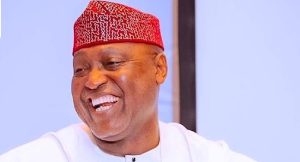
Chairman of the committee, Rep. Seyi Sowunmi (LP–Lagos), disclosed this on Wednesday in Abuja during the official inauguration of the panel on the Pre-Shipment Inspection of Exports and the Non-Repatriation of Crude Oil Proceeds.
Sowunmi noted that available allegations pointed to “a significant breakdown in compliance by relevant stakeholders.”
> “It is alleged that operators in the oil and gas industry failed to repatriate an estimated 40 to 45 per cent of Nigeria’s crude oil export proceeds, amounting to approximately 850 billion dollars between 1996 and 2014, in clear contravention of the law,” he said.
The lawmaker expressed concern over discrepancies among data released by key government agencies — including the Central Bank of Nigeria (CBN), the Department of Petroleum Resources (now NUPRC), the Nigerian National Petroleum Corporation (NNPC), and the National Bureau of Statistics (NBS) — as well as inconsistencies when compared with OPEC figures.
He further noted that reports from the non-oil export sector, particularly solid minerals and other commodities, also indicated “high levels of non-compliance in export earnings.”
> “The House of Representatives, in support of President Bola Tinubu’s Renewed Hope Agenda, has set up this committee to investigate the massive revenue leakages highlighted above,” Sowunmi stated.
He explained that the committee’s mandate includes holding public hearings to establish the actual volume of unremitted export proceeds since 1996, verifying the accuracy of data from relevant agencies, and engaging forensic experts for a detailed reconciliation of accounts.
According to him, the investigation will be “guided strictly by evidence, verifiable documents, and data—not speculation.”
Sowunmi emphasised that every dollar earned from Nigeria’s exports must be accounted for and returned to the Federation Account, adding that “the committee’s true measure of success is not publicity but verifiable financial recovery.”
> “This is a whole-of-system exercise. Operators must supply shipment-to-receipt trails; regulators must reconcile production, certification, and forex returns. Financial institutions must provide account-level evidence of repatriation within time. Where breaches are discovered, appropriate civil and criminal sanctions shall be applied,” he warned.
The chairman pledged to keep Nigerians updated with accurate information, publish non-sensitive documents where necessary, and work closely with the media to ensure transparency.
He also encouraged whistle-blowers within the industry, financial institutions, and inspection agencies to come forward, assuring them of confidentiality and possible rewards for credible information.
Sowunmi called for full cooperation from all stakeholders, stressing that the investigation was non-partisan and aimed solely at safeguarding Nigeria’s economic interests.
NAN