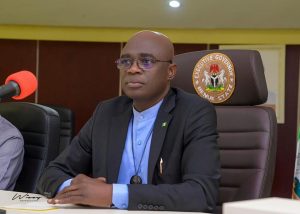
Sokoto State Commissioner for Religious Affairs, Associate Professor Jabir Maihula,
Worried by the ever-growing insecurity in the country, the Sokoto State Commissioner for Religious Affairs, Associate Professor Jabir Maihula, has appealed to the Nigerian media to deny insurgents, terrorists and bandits the needed oxygen to thrive by deliberately shifting away from the free publicity given to their activities.
Prof. Maihula, who made the appeal on Monday in Sokoto at the opening of a two-day workshop organised by Alkalanci, a fact-checking organisation, in collaboration with the Sokoto State Ministry for Religious Affairs, said educating religious leaders on how to verify information and authenticate its reality before spreading it is very important.
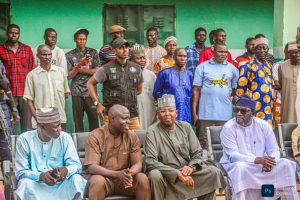
The two-day workshop, attended by highly respected Islamic clerics across the state, has as its theme, “Combatting False Narratives and Promoting Media Literacy Programme.”
Speaking on the topic, “Building Resilient Communities Through Fact-Checking and Media Literacy,” the commissioner urged clerics to always consider the impact and feedback of their sermons.
The Sultan of Sokoto and President-General of the Nigerian Supreme Council for Islamic Affairs (NSCIA), Muhammad Sa’ad Abubakar III, represented by Sarkin Malaman Sokoto, Ahmad Umar Helele, urged Nigerians, especially those in the media industry, to be careful about misinformation, disinformation and malinformation.
Highlighting why caution, objectivity and national interest should guide daily life, the respected religious and traditional leader urged Nigerians to remember that “we are together in a moving vehicle; hence, we must continue to love and pray for the driver.”
“If our attitudes while in this moving vehicle cause any accident, the driver is most likely to escape, while we, the passengers, suffer the brunt,” the Sultan warned.
Earlier in his opening remarks, the Editor of Alkalanci, Alhassan Bala, said workshops of this nature are timely and necessary, especially as Nigeria approaches an election year when the risk of misinformation and disinformation will significantly increase.
“Beyond local actors, foreign information manipulation and interference (FIMI) are also expected, as several countries have strong interests in Nigeria’s elections. At the same time, artificial intelligence has made the creation of fake content more sophisticated. AI-generated images, videos and audio—commonly known as deepfakes—are becoming increasingly difficult to detect.”
While stressing that society now lives in an era where information travels faster than ever before, Alhassan said this makes it even more important for clerics to understand how falsehoods are created and spread, and how influential individuals like them can protect their reputations and communities from being misled.
On why most content shared via social media is inaccurate, misleading, divisive and harmful, Alhassan said it “poses a direct threat to peace, unity and trust within our communities.”
“That is why we are gathered here today in Sokoto to take a stand against falsehood and to equip ourselves with the knowledge and skills needed to build resilience through truth,” Alhassan noted.