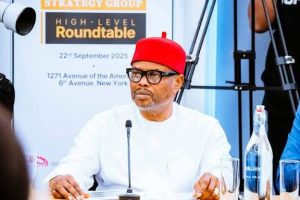
Former Niger State Governor Babangida Aliyu
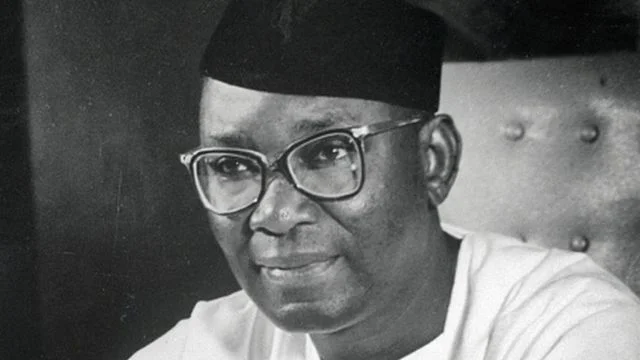
Former Niger State Governor, Dr. Mu’azu Babangida Aliyu, has said that Nigeria’s founding father, Dr. Nnamdi Azikiwe (Zik), made profound political sacrifices to preserve the nation’s unity—an attitude he believes is lacking among today’s political class.
Aliyu spoke in Abuja during the 6th Annual Dr. Nnamdi Azikiwe Award Lecture 2025, held in honour of Zik’s 121st posthumous birthday and themed “ _The Power of Pan-African Unity: Strengthening Nigeria’s Role in African Integration and Development.”_
As Chairman of the event’s National Planning Committee, he reflected on Zik’s pivotal role during Nigeria’s early, turbulent years.
According to him, the period immediately before and after independence came with serious national strains, yet Azikiwe consistently chose compromise to safeguard the young federation.
“Zik was a Nigerian even before Nigeria gained its independence… he could, as a realist, compromise to ensure the survival of the nation,” Aliyu said.
He recalled Azikiwe’s alliance with the NPC before the 1966 coup, which eventually made him ceremonial president, as well as the partnership between his party and the MPN during the Second Republic.
“They came together to ensure that Nigeria remains one,” he added.
Aliyu urged Nigerians to emulate Zik’s sense of duty and patriotism.
“If we were to choose where to be born, probably many people may not want to be born in Nigeria. But since it was not a choice… it is only natural that you should be proud and love your country,” he said, noting that every major religion encourages devotion to one’s nation.
*‘A House Divided Cannot Lead Africa’ — Keynote speaker warns*
Delivering the keynote address, the Chairman of the Code of Conduct Tribunal (CCT), Dr. Mainasara Umar-Kogo, called for a moral reset and a renewed commitment to Pan-African ideals.
He argued that despite the foundation laid by figures like Azikiwe, Kwame Nkrumah, and Nelson Mandela, Africa is still held back by poor leadership, corruption, and deep divisions.
“Let us be honest with ourselves. What kind of house have we built after Zik?” he asked.
“A house divided by ethnic strife cannot endure. A house corroded by corruption cannot inspire.”
Umar-Kogo said Nigeria cannot hope to guide Africa unless it first repairs itself.
“A divided Nigeria cannot unify Africa. A corrupt Nigeria cannot inspire Africa. A lawless Nigeria cannot lead Africa,” he warned, stressing that unity itself is a moral principle.
He described Pan-Africanism not just as an economic vision but as a political project requiring fairness and justice, urging leaders to abandon greed and return to viewing power as a sacred responsibility.
He lamented that leaders today are “obsessed with wealth and power,” unlike the early statesmen who saw leadership as something to be accounted for “before God and history.”
*‘Zik’s Legacy Must Be Preserved’ — Onyeke*
The Director-General of the annual award, Chief Chineme Onyeke, said the lecture is inspired by the belief that nations must do more than honour their heroes—they must continue the dreams those heroes lived for.
He said this year’s theme was chosen to refocus Nigeria toward leading a renewed African resurgence. Beyond the lecture, the organisers plan to establish the Zik Centre for Leadership and African Studies, a research and training institution dedicated to grooming future leaders.
Onyeke appealed to the Federal Government, through Minister Nyesom Wike, to allocate land for the project.
“History does not remember us by the titles we bear… but by the values we upheld and the institutions we build,” he noted.
*Azikiwe’s Widow: Nigeria Must Document Its History*
Prof. Uche Azikiwe, widow of the late statesman, praised the organisers and emphasised the urgent need to properly document Nigeria’s past.
She said many of the details presented at the lecture were new even to her.
“Most of our problem is that we do not know what happened in the past… If we know the history and the foundation of this country, Nigeria would have been something else,” she said.
(NAN)