Late former President Muhammadu Buhari
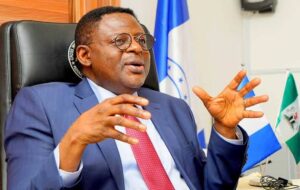
Special Adviser to the Minister of Marine and Blue Economy, Dr. Bolaji Akinola, has said that the late former President Muhammadu Buhari left a lasting mark on Nigeria’s maritime industry, which Nigerians will long remember.
In an interview with the News Agency of Nigeria (NAN) in Lagos on Tuesday, Akinola highlighted that Buhari’s transformative efforts significantly bolstered maritime security and enhanced Nigeria’s global standing in the sector.
“Following the passing of President Muhammadu Buhari on Sunday, July 13, Nigeria mourns not only a former Head of State but also a visionary whose maritime reforms reshaped the industry. At a time when Nigeria’s waters were among the world’s most perilous, Buhari took decisive action to address these challenges,” Akinola remarked.
He pointed to the launch of the Deep Blue Project, a multi-billion-naira initiative aimed at curbing piracy, sea robbery, and illegal activities in the Gulf of Guinea. Supported by aerial surveillance and a sophisticated command center, the project significantly reduced piracy incidents, boosting investor confidence and reinforcing Nigeria’s position as a key maritime hub in West Africa.
Akinola also noted that Buhari’s administration enacted the Suppression of Piracy and Other Maritime Offences Act in 2019, making Nigeria the first West African nation with a dedicated anti-piracy law. Additionally, the commissioning of the Lekki Deep Sea Port in 2023 marked a milestone in infrastructure development, enhancing cargo handling, reducing vessel turnaround times, and creating numerous jobs.
“Buhari recognized that a robust maritime sector required strong connectivity. His administration advanced the development of inland dry ports in locations like Kaduna and Kano, bringing maritime services closer to the hinterland, easing port congestion in Lagos, and lowering transportation costs for businesses,” Akinola added.
He emphasized that Buhari’s maritime agenda was results-oriented, focusing on tangible outcomes such as safer waterways, modernized ports, and strengthened maritime institutions. “His legacy will endure in the flow of goods, the safety of seafarers, and the revitalized maritime nation he helped build. May Almighty Allah forgive his shortcomings, accept his good deeds, and grant him Al-Jannah Firdaus. Ameen,” Akinola concluded.
Captain Tajudeen Alao, President of the Master Mariners Association of Nigeria (MMAN), echoed these sentiments, praising Buhari’s introduction of the Deep Blue Project, which significantly reduced piracy in Nigeria’s Exclusive Economic Zone (EEZ) and the Gulf of Guinea. This achievement earned Nigeria international recognition from the global maritime community.
Alao also highlighted other reforms under Buhari’s leadership, including the reintroduction of 24-hour port operations, the infrastructural revival of MAN Oron, now rated as Africa’s top maritime academy after decades of neglect, and the prompt payment of retirees’ entitlements from organizations such as the Nigeria Ports Authority (NPA) and Nigerian Airways. Additionally, Buhari’s regime introduced measures to enhance ease of doing business at ports and established an anti-corruption task force.
Alao further noted that Buhari signed the Petroleum Industry Bill into law and oversaw the privatization of the Nigerian National Petroleum Corporation (NNPC) into multiple entities. However, he acknowledged that foreign exchange shortages during Buhari’s tenure impacted the import-dependent economy, leading to reduced business activities at the ports. (NAN)