By CHRISTIANA LOT, Jos –
Stakeholders have reiterated the indispensable role of women in sustaining peace and fostering religious tolerance, stressing their full inclusion in decision-making processes and peacebuilding frameworks across Nigeria.
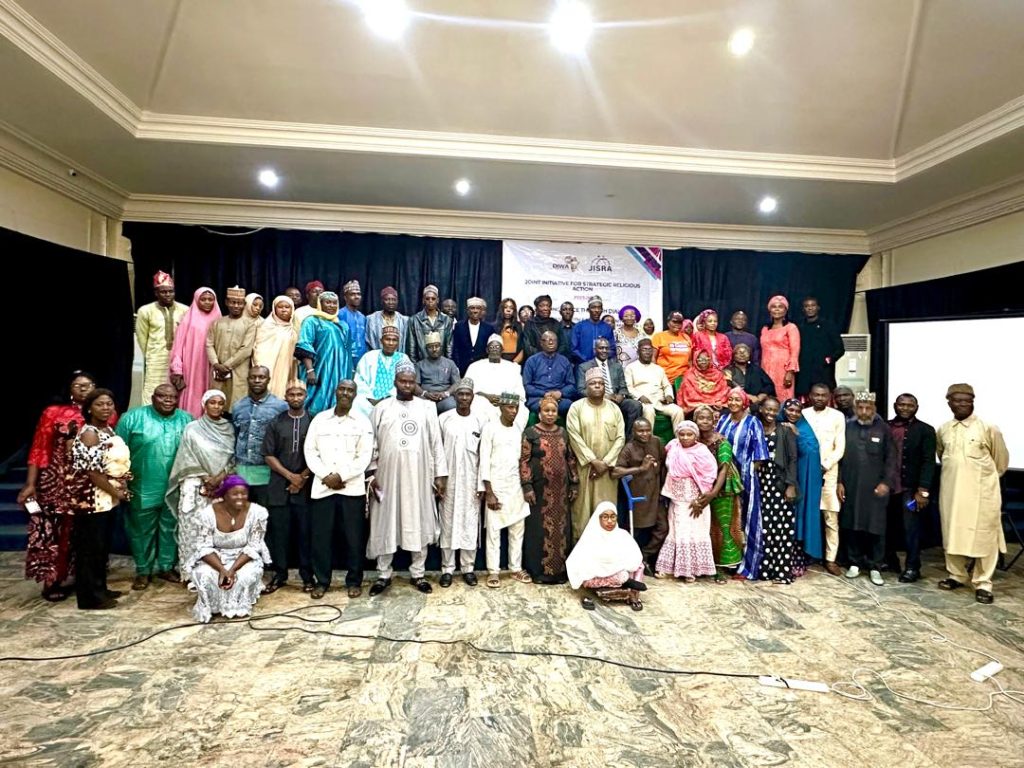
This collective stance emerged at a roundtable held on Tuesday, August 26, 2025, in Jos, Plateau State, organized by the Joint Initiative for Strategic Religious Action (JISRA) in collaboration with the Development Initiative of West Africa (DIWA).
The event, themed “ Sustaining Peace Through Dialogue: A Roundtable with Faith Communities on Advancing Freedom of Religion or Belief (FoRB) and the Rights of Minority Groups in Nigeria,” brought together participants from religious institutions, civil society, traditional councils, youth groups, and grassroots communities.
Delivering the opening remarks on behalf of DIWA’s Chief Executive Officer, Project Officer Habila Mohammed Kudu described peace as “a bridge between what JISRA has achieved and what our communities must now own.”
“Peace cannot be outsourced or left to chance. It must be nurtured intentionally, protected collectively and sustained through continuous dialogue,” he said.
Presenting the keynote address, the Chief Imam of Jos, Sheikh Ghazali Ismail Adam, emphasized the need for trust-building, inclusion, and deliberate action. He urged stakeholders to center the voices of women and minority groups in peace efforts.
“Dialogue is not just conversation, it is a tool for transforming relationships. We must build trust among ourselves, include women at the table, and take tangible steps that go beyond rhetoric. Without justice, there will be no peace; without inclusion, there will be no justice,” the Imam stated.
He further noted that since 2021, JISRA has made notable progress in reshaping both inter- and intra-faith relationships in Kaduna and Plateau States, while promoting shared values among communities previously divided by conflict.
Also speaking at the event, Mr. Dombin, Director of Planning, Research and Statistics in the Plateau State Ministry of Women Affairs and Social Development, represented the Commissioner, Hon. Caroline Dafur. He emphasized that women’s participation remains central to any sustainable peace agenda.
He disclosed that the state government had defended a ₦2 billion budget for 2026 to address gender-based violence and scale up women empowerment programmes. In addition, a ₦250 billion counterpart fund has been paid to the World Bank to train 15,000 women across two phases.
“No peacebuilding strategy can succeed without women. This is why the government is scaling up interventions to reach more vulnerable local government areas, including Crisis LGA,” he said.
Throughout the session, grassroots representatives shared reflections on the positive impacts of JISRA’s interventions. They highlighted how women and youth have emerged as peace agents, fostering interfaith harmony through inclusive platforms, dialogue, and joint livelihood ventures. According to them, many of the recorded gains would have been unattainable without women taking up leadership roles in their communities.
Reflecting on the media’s role, Lola Fadile Bello, speaking on behalf of the Correspondents’ Chapel of the Nigerian Union of Journalists (NUJ), Plateau State, stressed the media’s responsibility in shaping peace-centered narratives. She highlighted the chapel’s initiatives, including peace summits, media advocacy, and journalist capacity-building programmes, aimed at enhancing social cohesion.
“Today, the media must move beyond headlines to become a platform for dialogue, understanding and unity. Women’s stories are peace stories, and we must tell them boldly,” she said.
The roundtable also featured the launch of a communiqué developed during the 2024 Women’s Summit on FoRB and Peacebuilding. It called for stronger legal protections for minority rights, inclusive governance, and community-led dialogue mechanisms to consolidate peace gains.