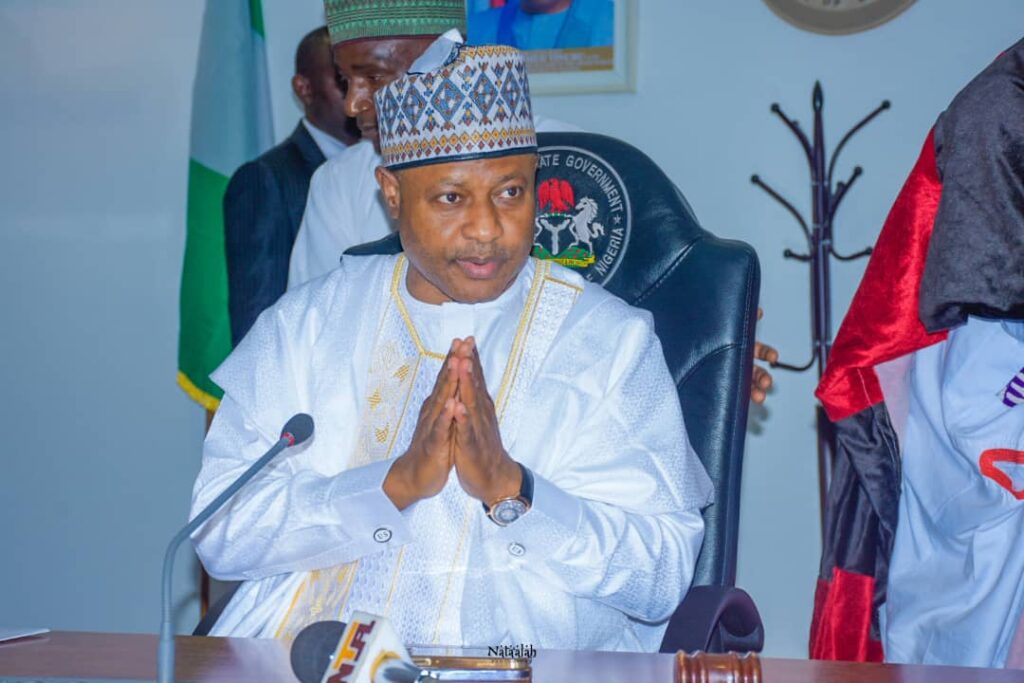
Kaduna State Governor, Uba Sani
Kaduna State Governor, Senator Uba Sani, has described the Arewa Consultative Forum (ACF) as the North’s foremost intellectual engine room, urging the body to continue shaping policy, guiding governance, fostering dialogue, and preserving unity across the region.
The governor made the remarks in Kaduna at the 25th anniversary celebration of the Forum, where he served as the Chief Host, and was was represented by his Deputy, Dr. Hadiza Sabuwa Balarabe.
Governor Uba Sani said the ACF has remained a stabilising platform for northern Nigeria, adding that its role in thought leadership and consensus-building is critical to the region’s political and socioeconomic advancement.
He pledged to continue working closely with the Forum, the Federal Government under President Bola Ahmed Tinubu, sister northern states, development partners, civil society organisations, and the private sector to build a North that is “secure, inclusive, prosperous, and globally competitive.”
Reflecting on the formation of the ACF on March 7, 2000 in Kaduna, the governor urged the Forum to sustain its founding values of unity, justice, dialogue, and collective progress. He prayed that the next 25 years would yield “greater achievements, deeper cohesion, and a more peaceful Northern Nigeria.”
Uba Sani expressed appreciation to President Tinubu, describing him as a leader “courageously and strategically” steering national security reforms, driving economic re-engineering, and promoting stability across the federation.
Speaking on the situation in Kaduna State, he said his administration had adopted a governance model anchored on inclusion, transparency, reconciliation, and citizen participation—principles he said were rebuilding trust and strengthening engagements across communities.
He explained that the state’s evolving security framework—dubbed the Kaduna Peace Model—is built on a combination of inclusive governance, community involvement, infrastructural development, and fair distribution of projects. According to him, peace “is not enforced; it is engineered.”
The governor noted that calm had returned to vulnerable communities through intelligence-driven operations, strengthened support for security agencies, empowerment of local institutions, and integration of technology into security management.
He added that farmers across the state had returned to their farmlands with renewed hope, backed by government investments in mechanisation, improved inputs, extension services, and market access, maintaining Kaduna’s position as a key food basket in the North.
Uba Sani also highlighted achievements in health, education, and infrastructure, stating that his administration had upgraded secondary hospitals, revitalised primary healthcare centres, and scaled up maternal and child health programmes to ensure no citizen is denied healthcare due to distance or poverty.
On education, he said the state was expanding school enrollment, improving facilities, training teachers, and strengthening technical and tertiary institutions, stressing that education remained the bedrock of Kaduna’s long-term peace and development strategy.
He added that infrastructure projects were being delivered equitably across all 23 local government areas, with deliberate emphasis on balancing rural and urban development.