Director-General of the World Trade Organisation (WTO), Dr Ngozi Okonjo-Iweala
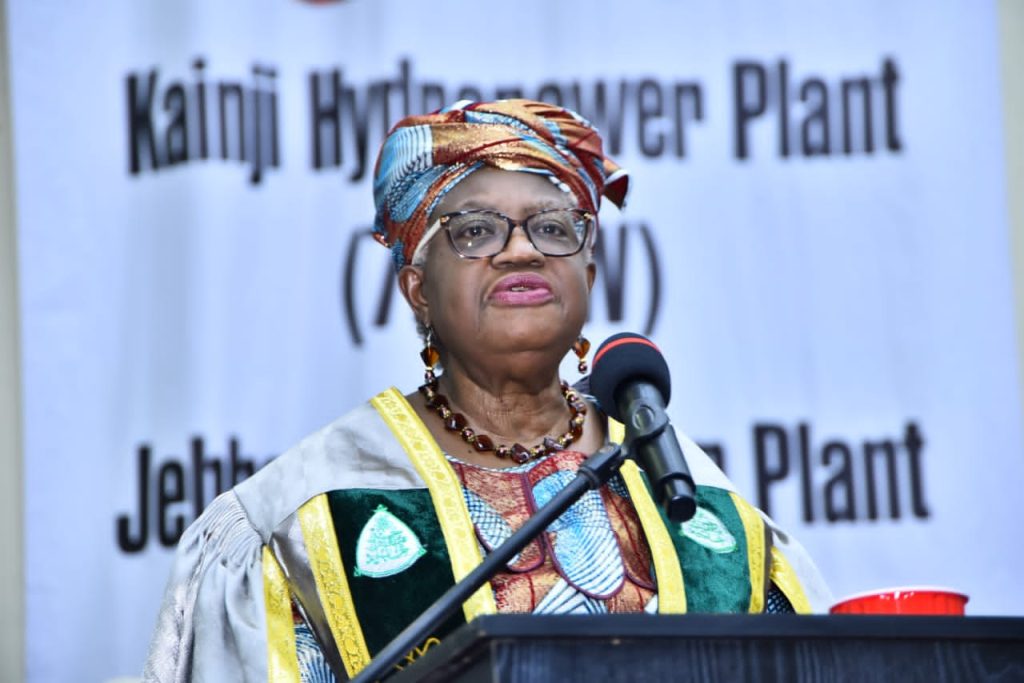
Director-General of the World Trade Organisation (WTO), Dr Ngozi Okonjo-Iweala, has urged African countries to stop positioning themselves as dependants on a shrinking pool of foreign aid, insisting that the continent must instead present itself as a major destination for global investment and trade.
Okonjo-Iweala made the call on Friday at the Pre-Convocation Lecture of Ahmadu Bello University (ABU), Zaria, where she delivered a lecture entitled “Challenges and Opportunities for Africa and Nigeria in the Present Global Geopolitical and Geostrategic Context.”
She said Africa should approach the rest of the world as the workforce and market of the future, as well as a key source of diversification and resilience in the global economy.
Speaking against the backdrop of growing global uncertainty, the WTO chief said the current turmoil in the international system, though troubling, offered Africa and Nigeria fresh opportunities if properly managed.
“As disheartening as the news often is these days, from Sudan to Greenland, I am convinced that this crisis presents opportunities for the continent,” she said. “But to seize them, our leaders must step up at home and build stronger investment and commercial ties across the region.”
Okonjo-Iweala noted that recent global shocks had exposed the dangers of over-reliance on China for critical supplies and on the United States for market demand, adding that countries and businesses were now deliberately diversifying their supply chains.
She explained that Africa stood to gain from what she described as “re-globalisation” by attracting investments across multiple sectors, including labour-intensive manufacturing, critical mineral mining and processing, pharmaceuticals, renewable energy and agro-processing.
Using renewable energy as an example, she said imports of solar and wind technology had already made clean power cheaper than grid electricity and diesel generators in many places. However, she stressed that Africa must move beyond importation to local manufacturing.
“We should be looking to manufacture these items at home, not just import them. That is how we create jobs for our young people,” she said.
The WTO Director-General revealed that although Africa accounts for about 60 per cent of the world’s solar energy potential, it attracts only two per cent of global solar investment.
She said this imbalance must be corrected and urged African leaders to create an enabling environment that would attract investors, including from China, into solar manufacturing and power projects on the continent.
She also highlighted Africa’s demographic advantage, noting that the continent’s youthful population represents the global talent pool of the future.
According to her, by 2050 Africa is expected to account for about 25 per cent of the world’s working-age population.
In addition, she pointed to Africa’s vast natural endowments, citing estimates by the US Geological Survey that the continent holds nearly 30 per cent of the world’s known mineral reserves, including rare earths and other minerals critical for the global low-carbon transition.
“If we leverage our abundant solar and wind potential, we can build African regional supply chains where mineral processing is powered by clean energy — good for jobs, good for growth and good for the planet,” she said.
Okonjo-Iweala warned that Africa had missed similar windows of opportunity in the past and expressed hope that the continent would not repeat the same mistake.
She called on leaders to act decisively in the interest of the people they serve, while also urging citizens to remain committed to long-term development and to make their voices heard in demanding it.