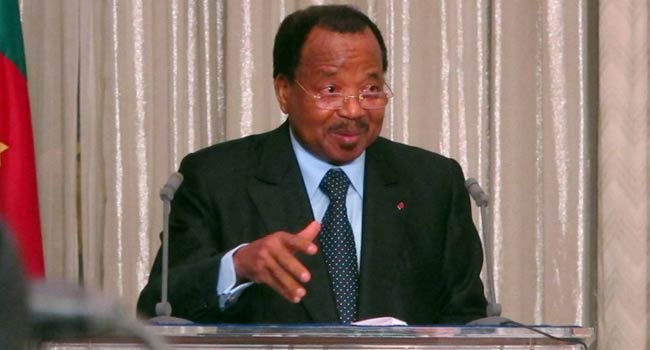
Cameroonian President, Paul Biya has been in power since 1982 and has won every election in the past 20 years by more than 70 percent of the ballot.
Cameroonians headed to the polls on Sunday in a presidential election where 92-year-old Paul Biya — the world’s longest-serving head of state still in office — is widely anticipated to clinch another term, extending his four-decade rule over the Central African nation.
Biya, who first took office in 1982, is running against 11 contenders, including 79-year-old Issa Tchiroma Bakary, a former employment minister who has stirred unexpected momentum on the campaign trail.
His growing popularity comes amid rising hopes for change in a country where half the population is under 20 — many of whom have known no other leader.
Polling stations opened at 8 a.m. and are set to close at 6 p.m. local time (0700–1700 GMT). Roughly 8 million citizens are registered to vote in this single-round election.
Despite having won every election over the last two decades with more than 70% of the vote, skepticism surrounds the fairness of the process.
“We shouldn’t be naive. We know full well the ruling system has ample means at its disposal to get results in its favour,” said Cameroonian political scientist Stephane Akoa in an interview with AFP. Still, he noted that this year’s campaign has been “much livelier” than in the past, adding that “this poll is therefore more likely to throw up surprises.”
Biya kept a characteristically low profile during the campaign season, making his first public appearance since May at a rally on Tuesday in Maroua, a strategic stronghold in the Far North with over 1.2 million eligible voters. Once a bedrock of support for Biya, the region is now seeing defections, with several former allies — including Bakary — turning against him.
*A Youthful Push for Change*
The opposition has been markedly more visible this year. Bakary, who left the government in June after 20 years in Biya’s camp, was greeted by massive crowds during his campaign stops. In Maroua, where Biya drew only a few hundred attendees, Bakary was met by thousands chanting and waving signs proclaiming “Tchiroma the Saviour.”
His candidacy has gained prominence in the absence of Maurice Kamto, Biya’s main challenger in the 2018 election, who was barred from running this time. Human Rights Watch and other organizations have criticized the decision, saying it calls the credibility of the vote into question.
Biya is only the second president Cameroon has had since gaining independence from France in 1960. Despite its wealth in natural and agricultural resources, the country faces pressing economic challenges. As of 2024, the World Bank estimates that about 40% of the population lives below the poverty line, and unemployment hovers around 35% in major urban centers.
According to Akoa, young people are eager for transformation — but unlike in other African or Asian nations, not yet to the point of risking mass protest. “The hunger for change is real,” he said, “but the fear of repression still lingers.”
As polls close, eyes remain on whether Cameroon will stick to the familiar or begin to pivot toward something new.
AFP