Japan International Cooperation Agency (JICA) and Universal Basic Education Commission (UBEC) has signed a Memorandum of Understanding towards Educational Environment Improvement at Model Schools for Basic Mathematics, Science and Pre-Vocational Education in Nigeria.
This project, is aimed at improving the learning environment in selected model schools across Nasarawa, Benue, and the FCT and is much more than infrastructure and equipment.
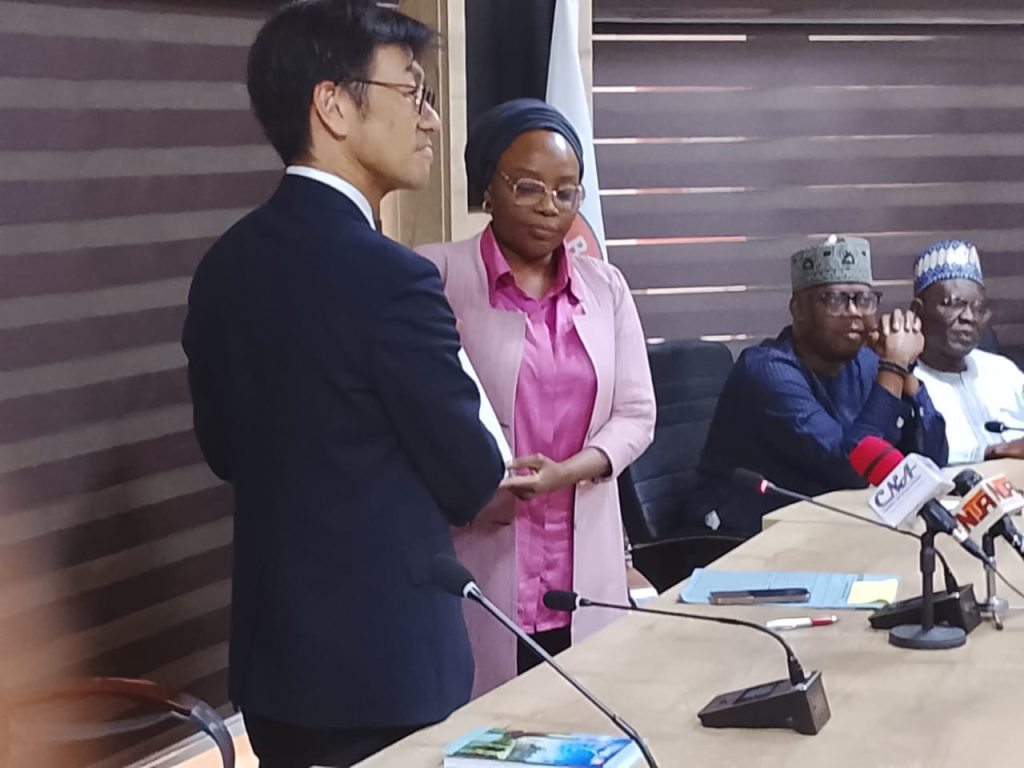
During the signing ceremony at the Commission headquarters in Abuja on Monday the Chief Representative of JICA in Nigeria, Ishigame Keiji revealed that JICA remains committed to promoting basic education in Nigeria through a combination of Grant Aid, Technical Cooperation, human resource development in Japan, and public-private partnerships.
According to him, the primary objective of the project is to enhance the educational environment by improving school facilities and equipment necessary for STEM and pre-vocational education
The project also aims to strengthen support systems for girls’ continuous learning in selected model schools, envisioned to serve as regional hubs across the target states.
” Through these efforts, we hope to contribute to the development of industrial human resources vital for Nigeria’s future”, he said.
“In the education sector, JICA remains committed to tackling the global challenges of the “learning crisis” and “learning poverty” by supporting efforts to improve learning outcomes. Following this policy, we have been worked here in Nigeria.
Our past initiatives, such as the SMASE Project, focused on strengthening mathematics and science education by training core instructors, expanding regional teacher training to all 36 states plus FCT, and enhancing practical science teaching methods”, he added.
“Under the current cooperation, Dr. Hikaru KUSAKABE has been serving as Basic Education Advisor at UBEC since 2024, supporting policy development. Moreover, under the ABE Initiative, which aims to foster business partnerships between Japan and Africa, one official from UBEC has been selected this fiscal year”.
“Furthermore, more than five UBEC officials have also participated in capacity-building training program in Japan through our Country-Focused Training programs this fiscal year”.
“Going forward,
Let me return to the project at hand before I conclude my speech. For the project to succeed, the proactive role of the executing agency is crucial. It is important to emphasize that UBEC is the owner of this project. Therefore, we hope UBEC’s continued cooperation in facilitating necessary administrative processes, and in ensuring effective monitoring during and after the implementation phase”.
“I sincerely hope that this project will serve as a cornerstone for strengthening STEM and pre-vocational education in Nigeria and that the friendship between Japan and Nigeria will grow even stronger through our continued collaboration”.
In her response, the Executive Secretary of UBEC, Aisha Garba welcomed the development and pledged the commission’s full support. .
Garba further emphasized that the project would go a long way in advancing the quality of education in the the chosen state and is much more than infrastructure and equipment.
According to her it’s about creating spaces where young minds can thrive in science, technology, mathematics, and pre-vocational education and slso about ensuring that girls have continued access to education and ultimately, about giving every child the chance to learn, grow, and succeed.
‘”We are here not just to sign documents, but to reaffirm a shared commitment—between our two countries, our institutions, and our people—to the future of education, and most importantly, to the children whose lives will be directly impacted by this initiative”.
She disclosed that, under the initiative, five model schools will be upgraded with new science labs, ICT rooms, vocational workshops, and gender-sensitive sanitation facilities. Equipment will also be provided to support
“It is a reaffirmation of our shared vision: that every Nigerian child—regardless of background—deserves access to quality, inclusive, and equitable education. This is our collective responsibility, and it is a goal that cannot be achieved without partnership, innovation, and sustained commitment”.
The project according to the Executive secretary, have a lifespan of five years.
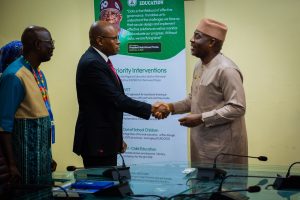
Ishigame Keiji signed the MOUo on behalf of JICA while
Aisha GARBA, Executive Secretary of Universal Basic Education Commission, and Dr. Sampson EBIMARO, Director and Acting Permanent Secretary of the Federal Ministry of Budget and Economic Planning, signed for Nigeria.