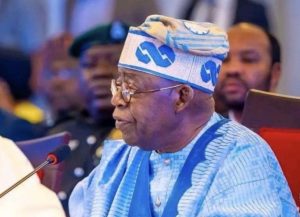
Former Benue State Governor, Samuel Ortom
The submission of the report of the Benue State Income and Expenditure Commission of Inquiry chaired by Justice Jubril Idrisu (Rtd.) has opened what may become one of the most consequential public accountability conversations in the history of Benue State.
The Commission, inaugurated by Governor Hyacinth Alia in June 2025 and mandated to investigate the income and expenditure profile of Benue State and its 23 local government councils between May 29, 2015 and May 28, 2023, reported that the state received approximately N826.5 billion during the period under review and expended about N683.4 billion. It further reported an unexplained balance of approximately N139.8 billion, recommending recovery from any persons found culpable after due process.
Former Governor Samuel Ortom has reportedly dismissed the findings as “political witch-hunting.”
But there is a fundamental question that deserves an answer: Can facts contained substantially in a former governor’s own handover notes also be dismissed as witch-hunting?
On June 10, 2026, Dr. Terver Akase, who served as Chief Press Secretary to former Governor Ortom, circulated on the Benue Wisemen platform excerpts from Ortom’s handover notes to Governor Alia. According to those notes, total income accruing to Benue State between May 29, 2015 and April 30, 2023 stood at N734.96 billion, while total expenditure amounted to N735.6 billion.
The handover notes also indicated that Ortom left behind liabilities totaling N187.56 billion, comprising loans, bonds, contractual obligations, salary arrears, and pension liabilities.
This is where the arithmetic begins to raise serious public-interest questions.
If the government received approximately N735 billion and spent approximately N735 billion during the period, how did it also leave behind debts and obligations of N187.56 billion?
Put differently, if revenue and expenditure were virtually balanced, what exactly financed the enormous outstanding liabilities that remained at the end of the administration?
The question is not rhetorical. It goes to the heart of public accountability, and much so that Ortom’s Administration grew the debt it inherited from Ortom’s predecessor by a factor of above 3!
Every naira borrowed should correspond to a measurable public asset, infrastructure project, institutional investment, or verifiable developmental outcome. Citizens are entitled to know what benefits accrued from those liabilities.
Indeed, the former governor’s own handover notes acknowledge that portions of the liabilities consisted of unpaid salaries and pensions. That admission makes the questions even more urgent.
If workers were owed salaries, pensioners were owed benefits, contractors were owed obligations, and government still accumulated substantial debts, then what precisely constituted the N735 billion expenditure reported in the handover document?
These questions become even more compelling when viewed against the physical condition of Benue State at the end of the administration.
A recent drive through Makurdi revealed infrastructure conditions that many citizens had unfortunately become accustomed to. Major roads within the state capital had deteriorated significantly. Some dual carriageways had effectively become single carriageways because one side had failed extensively. Roads leading to critical government facilities, including routes serving the Government House axis, required major reconstruction. Reconstruction work is presently being undertaken. But why did Former Governor Ortom neglect even major roads in the State capital while piling up public debts at the same time?
Infrastructure deterioration does not occur overnight. It is usually the cumulative result of years of inadequate maintenance and insufficient capital investment.
This reality creates a legitimate governance question: Where is the corresponding evidence of the enormous public expenditure reported during those eight years?
No administration is expected to solve all problems. Benue’s challenges are complex and longstanding. However, citizens have a right to expect a reasonable correlation between public resources received and visible developmental outcomes delivered.
The issue becomes even more striking when considered in broader economic terms.
The approximately N735 billion reported by the former governor represented enormous purchasing power during the period in question. At historical exchange rates prevailing across much of the 2015–2023 period, the resources available to the administration amounted to well over two billion United States dollars!
Such resources should leave unmistakable footprints in infrastructure, healthcare, education, industrialization, agriculture, water supply, transportation, and social services.
Where are those footprints?
This is not a partisan question. It is a governance question.
Today, citizens can observe extensive infrastructure activity across parts of Benue State. Roads are being constructed and rehabilitated. Educational institutions are receiving attention. Health facilities are being upgraded. Agricultural initiatives are being expanded. Technology and innovation projects are emerging. Existing debts are reportedly being serviced while salaries and pensions continue to be paid.
Reasonable people may disagree about the pace, priorities, or quality of current projects. That is normal in a democracy. What is not normal is refusing to answer legitimate questions about the stewardship of public resources.
Equally deserving of explanation is the curious omission in the handover figures themselves.
The figures publicly cited covered the period up to April 30, 2023, despite the administration ending on May 29, 2023. Citizens are entitled to know the financial transactions, revenues, expenditures, commitments, and obligations associated with the final month of the administration.
Transparency requires completeness.
The Justice Idrisu Commission has now placed additional information before the public. Its findings may ultimately be challenged, defended, accepted, rejected, modified, or subjected to judicial scrutiny. That is how democratic institutions work.
However, dismissing uncomfortable findings as “witch-hunting” does not answer the substantive questions raised.
The appropriate response is evidence.
Produce the records.
Show the projects.
Demonstrate the value delivered.
Explain the liabilities.
Clarify the discrepancies.
Account for the expenditures.
The burden of accountability does not disappear merely because an administration has left office. Public office is a sacred trust. Those who exercise authority over public resources remain accountable to the citizens in whose name those resources were collected and expended.
The people of Benue deserve facts, not slogans.
They deserve explanations, not distractions.
They deserve accountability, not evasions.
If the Commission’s findings are inaccurate, let the inaccuracies be demonstrated with evidence. If they are accurate, then appropriate legal and administrative actions should follow in accordance with due process and the rule of law.
Ultimately, this matter is bigger than any individual governor, political party, or administration.
It is about establishing a culture in which public officials understand that stewardship of public resources carries permanent responsibilities.
Benue’s workers deserve answers.
Benue’s pensioners deserve answers.
Benue’s taxpayers deserve answers.
Benue’s youths deserve answers.
And until those answers are provided, one conclusion remains unavoidable:
Ortom must answer.

© Shilgba