By CHRISTIANA LOT, Jos–
As part of efforts to revive agricultural activities and create employment opportunities for youths in the state, the Plateau State Government has recently conducted an assessment tour of the Pioneer Milling Company (PMC) and BARC Farms in Zalaki, Bassa Local Government Area.
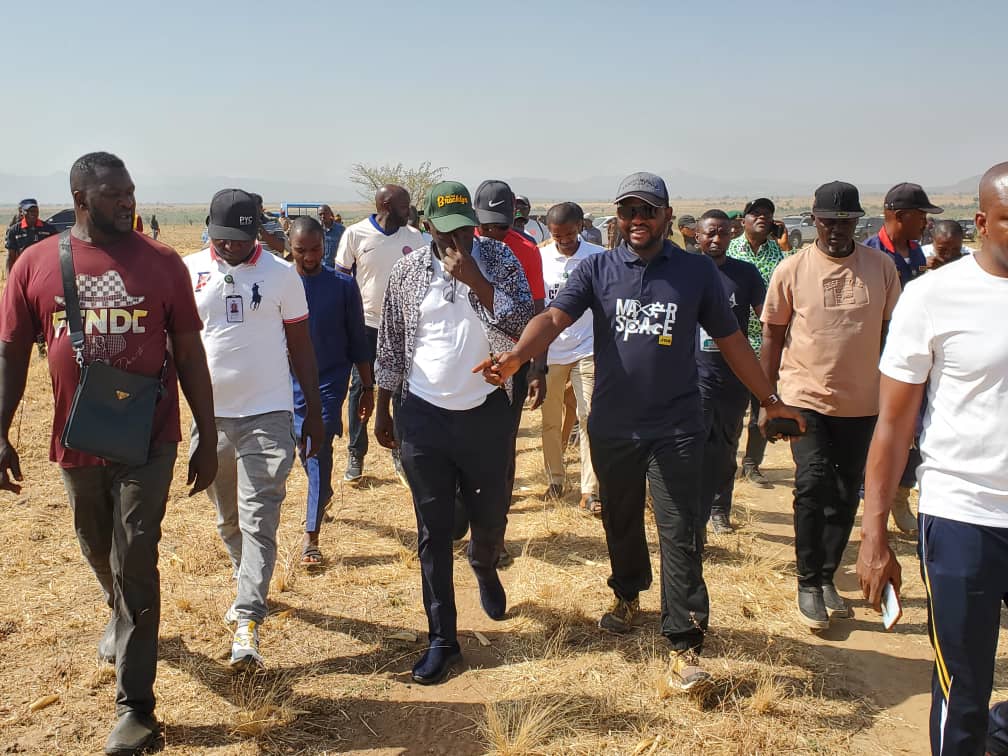
A government delegation, accompanied by security personnel, visited the 4,000-hectare farmland to evaluate the condition of existing infrastructure and assess damages caused by vandalism before the government reclaimed the facility.
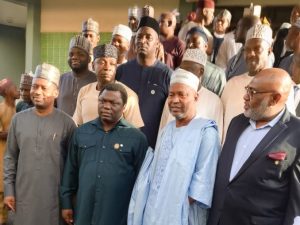
The team included the Special Adviser to the Governor on Youth Mobilization and Engagement, Hon. Joshua Pwajok Hitler, the Special Adviser on Local Government Administration, Hon. Jonathan Dabo, and other senior officials from relevant state agencies.
During the inspection, the delegation observed significant deterioration of structures, including the administrative section, loading bay, and processing areas. However, officials outlined plans to restore the facility, noting that while 600 hectares have already been allocated to a Plateau-based investor, the remaining 3,400 hectares will be developed for large-scale agricultural production.
Leading the advocacy for youth participation, Mr. Yari Kumchi explained that efforts are underway to provide necessary support for farming activities. He further disclosed that the government will provide essential farming equipment and inputs to ensure optimal use of the land.
“We have secured assurances that whatever we plant will have ready buyers. Some of them will even be here with us on the farm.”
“We will have enough tractors stationed here, not just for occasional use. Fertilizers and other inputs will be readily available. The aim is to make agriculture viable enough that young people see it as an attractive opportunity,” he stated.
Highlighting the long-term vision, Kumchi emphasized that the initiative is structured to empower committed youths who are willing to engage in full-time farming. He also noted that lessons have been drawn from successful agricultural models in other states.
“The only requirement is determination. We will live on the farm, operate the machinery ourselves, and manage production directly. Whatever we harvest will be sold, and the proceeds will be shared among those who worked, after deducting input costs.”
“His Excellency took us to Ibadan, where the Special Agro-Processing Zone is already running. Another team went to Benin, which has the best model we want to replicate here. It is working there, and it can work here too,” he explained.
In his remarks, Hon. Joshua Pwajok Hitler urged youths to embrace the initiative, emphasizing its potential to create jobs and develop agribusiness skills. He also assured that the project would be an avenue for future agribusiness leaders to emerge.
“This is more than just a farming project; it is an opportunity for young people to acquire knowledge that can be applied in their communities. The government has committed resources to ensure its success.”
“We have tagged this initiative the ‘Plateau Youths in Agriculture Empowerment Project.’ The goal is to ensure that while gaining knowledge here, you also pass it on. We will be implementing similar projects across various local governments, and you might become the pioneer leaders of agribusiness in your respective areas,” he noted.
A technical team of building and construction experts, along with geologists, was also on-site to evaluate the integrity of existing structures and assess water availability for irrigation ahead of the project’s full takeoff.
PMC/BARC Farms, which is owned by the Plateau State Government, has historically served as a major agricultural hub. However, years of neglect left the facility in disrepair.
Officials say efforts are underway to restore its operations, though the long-term success of the initiative will depend on sustained funding, security, and youth participation.