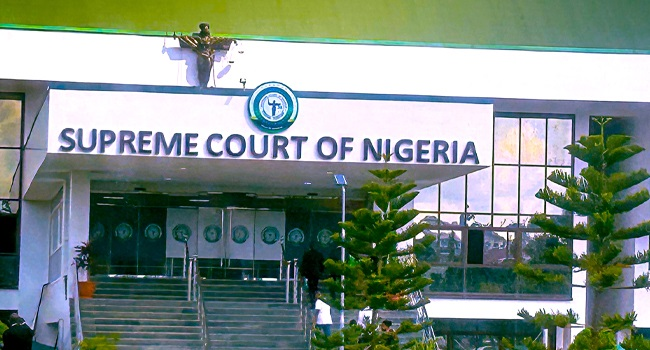
Supreme Court has affirmed the constitutional authority of the President to declare a state of emergency in any part of the country when law and order are threatened, ruling that such powers extend to the temporary suspension of elected officials where necessary to restore stability.
In a closely contested verdict delivered on Monday, the apex court, in a six-to-one majority decision, held that while the President may suspend elected officials during an emergency, such action must be limited in duration and strictly tied to the prevailing crisis.
Delivering the lead judgment, Justice Mohammed Idris said Section 305 of the 1999 Constitution grants the President wide powers to take “extraordinary measures” when a state faces the risk of chaos or anarchy.
Justice Idris according to Channels TV report, noted that the provision does not spell out the specific steps the President may take once emergency rule is declared, thereby leaving room for presidential discretion in responding to exceptional circumstances.
“The Constitution envisages situations where normal governance structures may be inadequate to contain a breakdown of law and order,” he reasoned, adding that emergency powers are designed to restore normalcy, not to permanently displace democratic institutions.
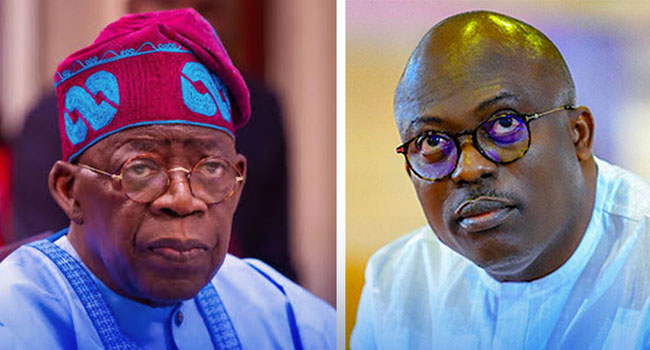
The ruling arose from a suit filed by Adamawa State and 10 other states governed by the Peoples Democratic Party (PDP), who challenged the declaration of a state of emergency in Rivers State by President Bola Tinubu. The emergency proclamation had led to the suspension of elected state officials, including Governor Siminalayi Fubara, for a period of six months.
Before addressing the substance of the case, the court upheld preliminary objections raised by the Attorney General of the Federation (AGF) and the National Assembly. Justice Idris held that the plaintiff states failed to establish a cause of action sufficient to invoke the Supreme Court’s original jurisdiction.
As a result, the suit was struck out for want of jurisdiction. However, the court went further to consider the issues raised on their merits and ultimately dismissed the case.
Despite the majority position, the judgment was not unanimous. Justice Obande Ogbuinya delivered a dissenting opinion, holding that while the President is empowered to declare a state of emergency, that authority does not extend to suspending elected officials.
According to Justice Ogbuinya, emergency powers should not be used “as a tool to remove or suspend governors, deputy governors or members of a state legislature,” insisting that such actions undermine the principles of democratic governance.
The landmark ruling now sets a clear judicial precedent on the scope and limits of presidential emergency powers, reinforcing executive authority while underscoring the need for restraint and constitutional balance.