President Bola Tinubu
President Bola Ahmed Tinubu has said his administration introduced a ₦200 billion intervention fund to boost the competitiveness of Micro, Small and Medium Enterprises (MSMEs) and support manufacturers grappling with structural challenges in the Nigerian economy.
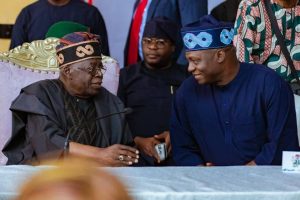
Speaking through Vice President Kashim Shettima on Monday at the 31st Nigerian Economic Summit in Abuja, Tinubu said the initiative is part of a broader effort to empower vulnerable groups, stimulate grassroots productivity, and make the economy more inclusive.
> “We established a ₦200 billion intervention fund to support micro, small, and medium enterprises and manufacturers, helping them overcome structural challenges and enhance competitiveness,” the president stated.
He explained that despite ongoing economic reforms, recent data showed promising signs of recovery. With Nigeria’s GDP expanding by 4.23% as of September 2025, Tinubu said the progress has exceeded forecasts from both multilateral institutions and local economists.
> “All our decisions are guided by a balance between sound economic logic and the expectations of Nigerians,” he said.
*Pathways to Prosperity*
Reaffirming his administration’s commitment to inclusivity, Tinubu emphasized targeted initiatives to restore hope for the unemployed, underprivileged, and underserved segments of society.
> “As a people-oriented government, our priority remains restoring hope to the unemployed, the poor, the excluded, and the vulnerable,” he said.
“We have created pathways for young Nigerians to access grants, loans, and equity investments of up to $100,000 to scale their enterprises, innovate, and build sustainable livelihoods.”
The president added that expanding access to digital micro-loans has boosted financial inclusion and strengthened community-level economic activity.
*Economic Stability and Reforms*
Tinubu credited recent economic stability—particularly in the foreign exchange market—to a series of deliberate policy decisions, including the removal of fuel subsidies.
> “The stability in our foreign exchange market is not accidental. It reflects deliberate choices guided by sound economic wisdom,” he said.
“These decisions have rescued public finances, stabilised the economy, and reassured investors at home and abroad.”
He acknowledged the “patience and sacrifices” of Nigerians, describing them as the cornerstone of recent economic progress.
> “To them, I say: the better days we promised are already within sight.”
According to Tinubu, Nigeria’s macroeconomic indicators show a nation on the rise:
GDP grew to ₦372.8 trillion in 2024, up from ₦309.5 trillion in 2023.
Revenue collection reached ₦27.8 trillion as of August 2025, already exceeding the ₦18.32 trillion target.
Non-oil revenue grew 411% year-on-year, pushing the tax-to-GDP ratio from 7% to 13.5%.
The country’s debt service-to-revenue ratio dropped from 97% to below 50%.
These improvements, he noted, led to a credit rating upgrade by Fitch and Moody’s, both of which commended Nigeria’s clearer policy direction and improved fiscal outlook.
*Tax Reforms and the Future*
Highlighting the four new Tax Reform Acts he signed into law, Tinubu said the measures are aimed at boosting domestic revenue, reducing dependence on oil, and streamlining compliance:
> “These reforms protect low-income earners, ensure fairness in corporate taxation, and strengthen digital innovation in tax administration,” he noted.
“By promoting transparency and coordination among all tiers of government, we are laying the foundation for a fairer and more prosperous Nigeria.”
*Security Still Key to Economic Growth – NESG*
Earlier, the Chairman of the Nigerian Economic Summit Group (NESG), Olaniyi Yusuf, stressed the importance of tackling insecurity as a critical enabler of economic reforms.
> “Without peace, reforms cannot take root, investors cannot take risks, and Nigerian youths cannot find opportunities for prosperity,” he said.
“Tackling insecurity in rural and urban areas alike is vital to unlock productivity and restore confidence.”
NAN