By CHRISTIANA LOT, Jos –
Plateau State Governor, Caleb Mutfwang has emphasized that transforming transport infrastructure is vital to Nigeria’s economic growth, regional integration, and sustainable peace, noting that “a well-connected Plateau is a prosperous Plateau.”
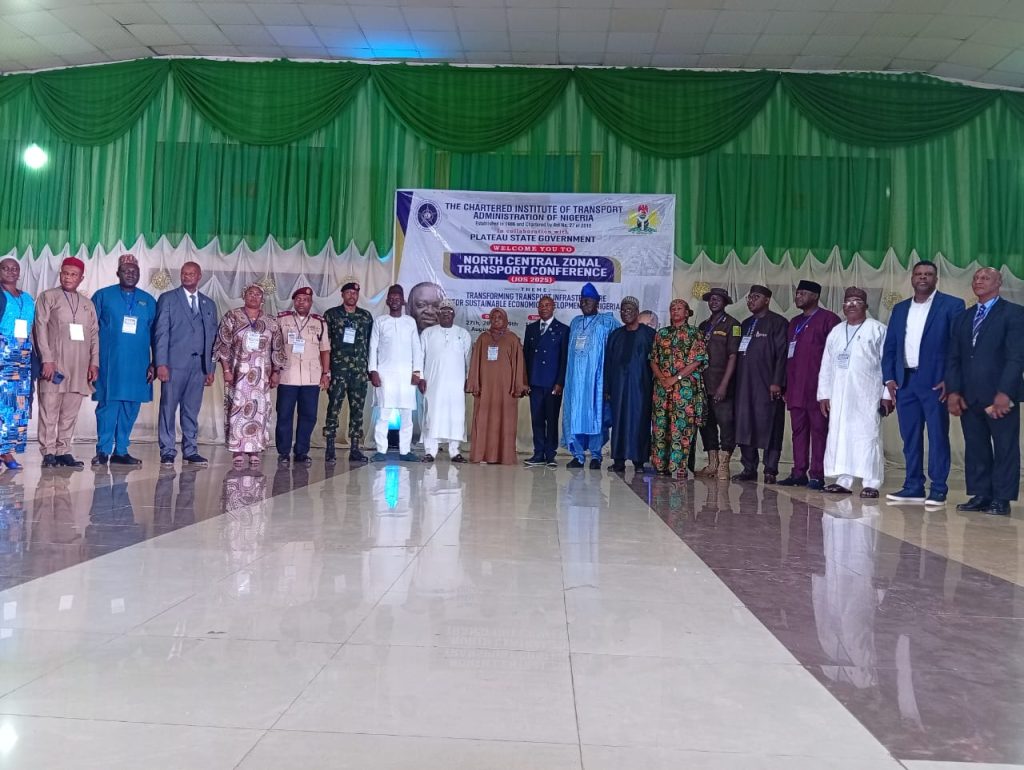
He made this known in Jos on Wednesday, August 27, during the opening ceremony of the North Central Conference of the Chartered Institute of Transport Administration of Nigeria (CIOTA).
According to him, no economy can thrive without a solid transport system, as efficient logistics reduce the cost of goods, link markets, and stimulate both tourism and investment.
“The theme of this conference, ‘ _Transforming Transport Infrastructure for Sustainable Economic Development’,_ could not have come at a better time. For us in Plateau State, this transformation is not just about development—it is a catalyst for peace, integration, economic prosperity, and job creation,” he stated.
Represented by the Head of Civil Service, Mr. Stephen Pam Gadong, the governor reaffirmed his administration’s commitment to prioritizing road rehabilitation, exploring rail linkages, and modernizing both urban and rural transport systems.
He called on CIOTA and private investors to collaborate with the state in building a transport ecosystem that aligns with the vision of a modern, inclusive Nigeria.
“We understand that we cannot walk this journey alone. That is why gatherings like this are crucial. The expertise and recommendations that will emerge from this conference can inform policy, strengthen interstate collaborations, and guide implementation strategies at both state and regional levels,” he added.
Speaking at the event, the Plateau State Commissioner for Transport, Hon. Jatau Davou Gyang, highlighted the government’s ongoing reforms in the transport sector.
These include the modernization of urban transit through the Plateau Express Service, planned deployment of mass transit buses across all 17 local government areas, and the signing of a Memorandum of Understanding with the Federal Airports Authority of Nigeria (FAAN) to upgrade Yakubu Gowon Airport into a cargo hub.
“The Plateau State Government under Governor Mutfwang has shown a strong commitment to transport reform. Our goal is to build a safe, accessible, and resilient network that supports inclusive growth and attracts public and private investment,” he said.
Gyang also revealed plans to introduce smart ticketing systems, strengthen regulatory frameworks, and revive the Jos metropolitan mass train service in partnership with the Nigerian Railway Corporation.
On his part, the Chairman of CIOTA Council, Prince Segun Ochuko Obayendo, described the transport sector as one of the most indispensable yet under-professionalized sectors in Nigeria.
He called for urgent reforms, including the professionalization of operators and the elimination of outdated enforcement mechanisms.
“Transportation is the most indispensable profession after divine providence. Yet, we continue to run it with unlicensed, untrained, and unprofessional actors. The biggest gap is not infrastructure but the absence of professionalism and regulation,” Obayendo stated.
He commended Plateau State for adopting CNG-powered buses, saying the development aligns with the Five Pillars of Sustainable Urban Mobility—Safety, Security, Predictability, Affordability, and Sustainability.
Delivering the keynote address, Professor Ibrahim Choji warned that Nigeria’s aging, colonial-era transport systems are ill-equipped to withstand current environmental challenges.
He called for urgent reforms that prioritize climate resilience.
“Our infrastructure was not built with climate resilience in mind. We must move beyond recommendations and adopt actionable strategies—such as establishing a Climate Risk Assessment Unit within the Federal Ministry of Works, using heat-resistant materials in road construction, and restoring 1,000 hectares of wetlands,” he advised.
The three-day summit, holding in Jos, has drawn policymakers, transport professionals, and private sector stakeholders from across the North Central zone.
The forum is expected to generate strategic recommendations for transforming Nigeria’s transport sector in line with national economic and environmental sustainability goals.