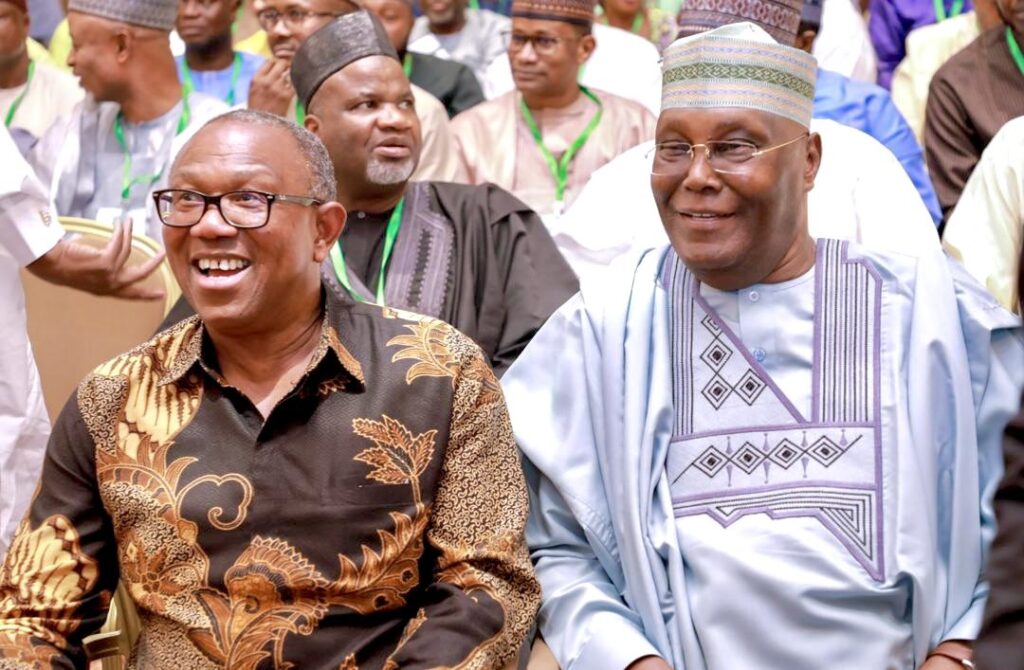
Peter Obi and Atiku Abubakar
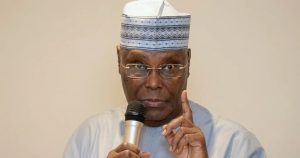
Former Vice President Atiku Abubakar and the Nigeria Democratic Congress (NDC) presidential candidate, Peter Obi, have welcomed the Federal Government’s decision to suspend the proposed increase in registration fees for the West African Senior School Certificate Examination (WASSCE) and the National Examinations Council (NECO), describing the move as a victory for Nigerians.
The Federal Government had earlier announced a suspension of the planned fee review following widespread criticism from parents, education stakeholders, civil society organisations and the general public.
Reacting to the development, Atiku in a statement on Monday, said the government’s decision validated concerns he had previously raised over the impact the proposed fee increase would have had on millions of Nigerian families.
“I welcome the Federal Government’s decision to suspend the proposed increase in WAEC and NECO registration fees. This reversal is a victory for millions of Nigerian parents, students, civil society organisations, and all citizens who refused to remain silent in the face of an unjust policy,” Atiku said.
He argued that increasing examination fees at a time of widespread economic hardship would have further deepened educational inequality and denied many indigent students access to higher education.
“This decision vindicates the concerns I expressed when I warned that pricing public examinations beyond the reach of ordinary Nigerians would deepen educational inequality, worsen the out-of-school children crisis, and deny countless brilliant but indigent students the opportunity to pursue higher education,” he stated.
The former vice president, however, questioned why the government often waits for public opposition before reversing controversial decisions.
“However, the question remains: why must this government always wait for public outrage before correcting policies that should never have been conceived in the first place?” he asked.
According to him, governance should not be based on trial and error.
“Governing is not a laboratory for reckless experimentation. Sound governments consult before they decide, not after Nigerians have been subjected to needless anxiety and uncertainty,” he said.
Atiku further criticised what he described as a recurring pattern of policy announcements without adequate consultation.
“It is becoming a disturbing pattern. This administration announces harsh policies with little evidence of meaningful consultation, only to retreat when confronted by overwhelming public opposition. That is not responsive governance; it reflects poor policy formulation.”
He maintained that the proposed examination fee hike would have created additional financial obstacles for families already battling inflation, high transport costs, rising electricity tariffs and declining purchasing power.
Commending Nigerians who opposed the policy, Atiku said, “I commend parents, teachers, labour organisations, student groups, education stakeholders, and every patriotic Nigerian whose collective voice compelled this reconsideration. Democracy works best when citizens hold their government accountable.”
He added that the suspension should not mark the end of discussions, urging the Federal Government to work with stakeholders on a sustainable funding model for WAEC and NECO without transferring additional costs to struggling families.
“Consultation is not a sign of weakness; it is the foundation of responsible governance,” he said.
Atiku also linked the development to the 2027 general election, saying Nigerians would have to choose between what he described as a government driven by “trial and error” and one with experience in governance.
“The lesson from this latest policy reversal is simple: a nation as important as Nigeria cannot be governed like a laboratory for endless experimentation. Nigerians deserve leadership that listens before it acts, consults before it decides, and gets it right the first time,” he added.
Peter Obi, in his reaction, also welcomed the government’s decision, describing it as “a victory for the Nigerian people.”
“I received the welcome news of the suspension of the newly introduced examination fees with relief. This is a victory for the Nigerian people,” Obi said.
While commending the authorities for responding to public concerns, Obi insisted the policy should never have been introduced.
“While I commend the authorities for listening to the widespread public outcry and suspending the policy, it must be said that the fee was an unnecessary burden that should never have been introduced at this time of great hardship, when we should be doing everything possible to invest in basic education and reduce the millions of out-of-school children in Nigeria.”
He stressed that education should remain accessible to every Nigerian child regardless of economic circumstances.
“At a time when many families are struggling to make ends meet, access to education should be expanded, not restricted. Education is a fundamental right and a public good, not a source of government revenue,” Obi said.
According to him, introducing multiple charges at the basic education level could prevent many children from accessing education.
“Imposing multiple fees at the basic education level risks denying many children their right to education. At that stage, the State has a duty to invest in educating and preparing its citizens for productive lives, not to erect financial barriers that keep them out of school.”
The former Anambra State governor also noted that good leadership requires the courage to reverse policies that impose hardship on citizens.
“True leadership is demonstrated not only by making decisions but also by having the humility to reverse policies that impose unnecessary hardship on the people. Many other anti-people policies deserve similar reconsideration.”
Obi expressed appreciation to citizens, parents and advocacy groups whose collective voices contributed to the government’s decision.
“I thank the citizens, parents, and advocacy groups whose voices made this reversal possible.”
He concluded his statement with his familiar message: “A New Nigeria is Possible.”