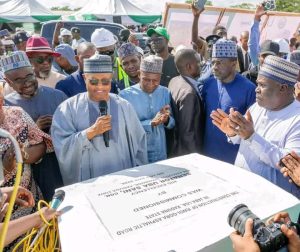
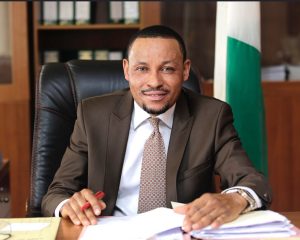
Combo of former embattled CBN Governor, Godwin Emefiele and the forfeited property
House of Representatives is calling on the Federal Government to repurpose a forfeited estate in Abuja—once tied to former Central Bank Governor (CBN) Godwin Emefiele—for the benefit of struggling Nigerians, particularly internally displaced persons (IDPs), low- and middle-income earners, and other vulnerable groups.
The motion, championed by Rep. Jafaru Gambo Leko, titled _“Need for Transparent and Equitable Allocation of Forfeited Abuja Estate Handed Over to the Ministry of Housing by the Economic and Financial Crimes Commission (EFCC),”_ was adopted during a recent plenary.
Leko revealed that the estate in question, located at Plot 109, Cadastral Zone C09, Lokogoma District, spans over 150,000 square metres and comprises 753 units of duplexes and apartments. It was recently transferred by the EFCC to the Federal Ministry of Housing and Urban Development, following a final forfeiture order granted by the Federal High Court.
The property, reportedly built with funds traced to illicit activities linked to Emefiele, now stands at the heart of a conversation about equity and public accountability. Leko described the estate’s recovery as “a significant milestone in the nation’s anti-corruption efforts.”
“If properly managed, the estate could contribute meaningfully to addressing Nigeria’s severe housing deficit, particularly in cities like Abuja,” Leko told fellow lawmakers.
However, he raised concerns over the potential for the estate to be quietly cornered by elites if transparent allocation mechanisms aren’t implemented. “Without a clear, accountable process, this asset recovery could be undermined, and the people it’s meant to help might never benefit,” he cautioned.
Referencing Chapter II of the 1999 Constitution (as amended), Leko reminded the House of the government’s duty to promote the welfare of citizens, including access to decent shelter.
To that end, the House resolved to:
Urge the Ministry of Housing and Urban Development to craft and make public an open, inclusive framework for allocating the estate.
Ensure that priority is given to displaced persons, low-income earners, and vulnerable citizens.
Direct the Ministry to submit a detailed report within 60 days outlining the estate’s usage plan, criteria for allocation, and how beneficiaries will be selected.
Additionally, the Committee on Housing and Habitat has been tasked with overseeing the process and reporting back within four weeks to ensure that the allocation reflects fairness and transparency.
“Transparency in asset management is vital to building public trust,” Leko stressed. “Nigerians must see the benefits of recovered assets directly improving lives.”
> (Source: Channels TV)