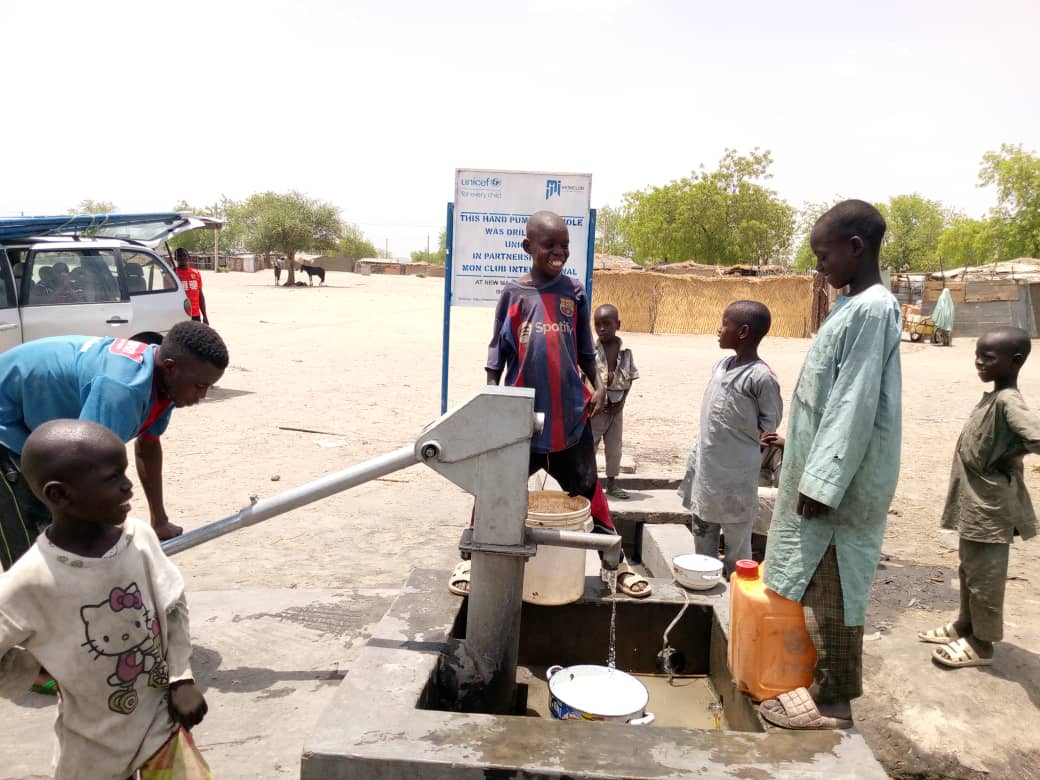
UNICEF through the RRM programme worked with Monclu International to drill 5 new hand pumps boreholes, providing access to a minimum of 15 litres water per person per day for at least 2,500 persons daily.
By SADIQ ABUBAKAR, Maiduguri –
The United Nations Children’s Fund (UNICEF) and partner, Monclub International are using the Rapid Response Mechanism (RRM) programme to ensure that no child dies of malnutrition, cholera or water borne diseases in New Marte.
“UNICEF has been saving lives and supporting children suffering from malnutrition , cholera, Measles and emergencies including drilling and reactivation of boreholes and overhead tanks in New Marte town of Marte LGA of Borno State in the northeastern part of Nigeria, which has a population of over 16,000 inhabitants comprising of members of the host community and internally displaced persons”, said the UNICEF Emergency Manager, Andrea Malatesta.
Malatesta said New Marte has a large percentage of young people with over 12,000 of the population between the ages of 0-17 years, adding that UNICEF despite these operational challenges is providing emergency response and supporting the young population in New Marte with essential services crucial to their immediate wellbeing.
“With funding from the Foreign, Commonwealth and Development Office (FCDO), UNICEF and partner, Monclub International is using the Rapid Response Mechanism (RRM) programme would ensure that no child dies of malnutrition, cholera or water borne diseases.
“Through the RRM programme, UNICEF is addressing the immediate needs of the local population to:- Provide the affected population with immediate and increased access to Water, Sanitation and Hygiene (WASH) services. Over 20,000 individuals and livestock have been supported with safe drinking water through water trucking”, Mr. Malatesta was quoted as saying in a statement issued on Thursday in Maiduguri by the UNICEF Communication Officer, Borno State, Folashade Adebayo.
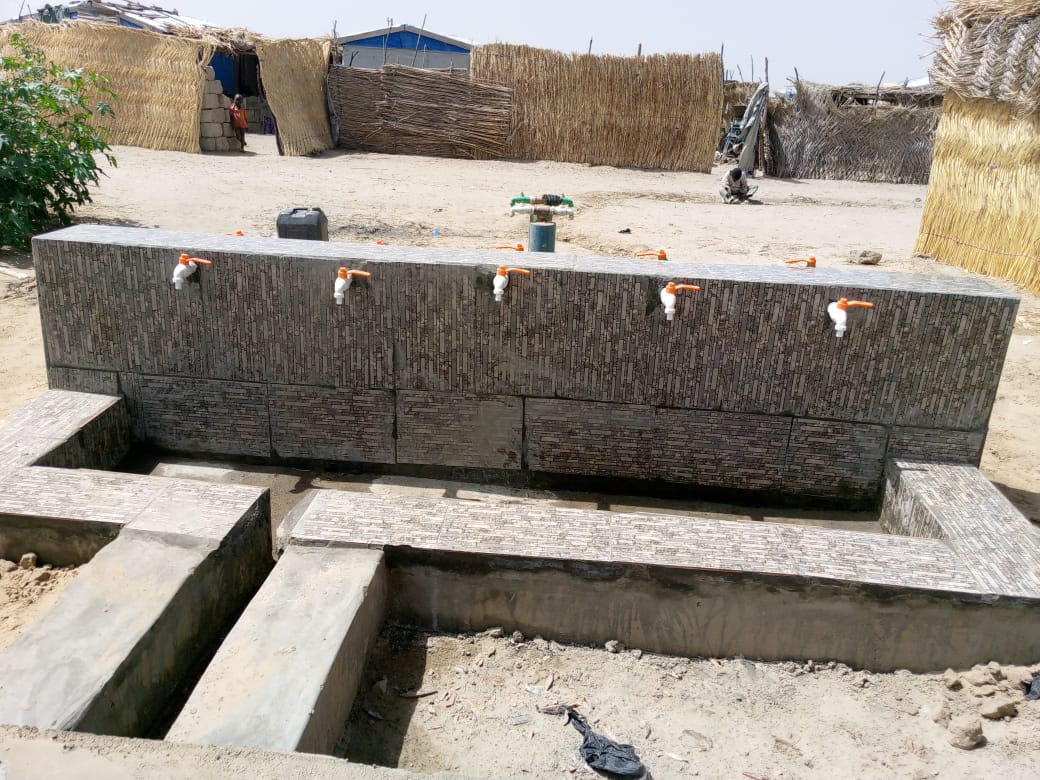
The statement added that: “As an emergency approach, households received water delivered to their houses through water trucks before the permanent solution to water shortages. UNICEF with support from FCDO has repaired 6 existing solar powered boreholes and provided additional fetching points.
“This is despite the fact that New Marte has severe access security issues. Access to New Marte is only possible by road and humanitarian operations rely heavily on military escort to transport personnel, supplies and other critical resources to support the local population affected by conflict.
“It was observed that being an area with security concerns, military escorts or safety sweep are required for the safe movement of individuals and goods. However, the availability of such escorts is often inconsistent or unreliable, leading to potential risks and vulnerabilities.
“Couple with the unscheduled military escorts which could take 3-5 days before its disrupt planned activities, hinder humanitarian operations, and compromise the safety of residents and personnel in the area. At least 10,000 individuals in New Marte are benefiting from this intervention which is helping to preserve their dignity and increase their access to safe water in addition,.
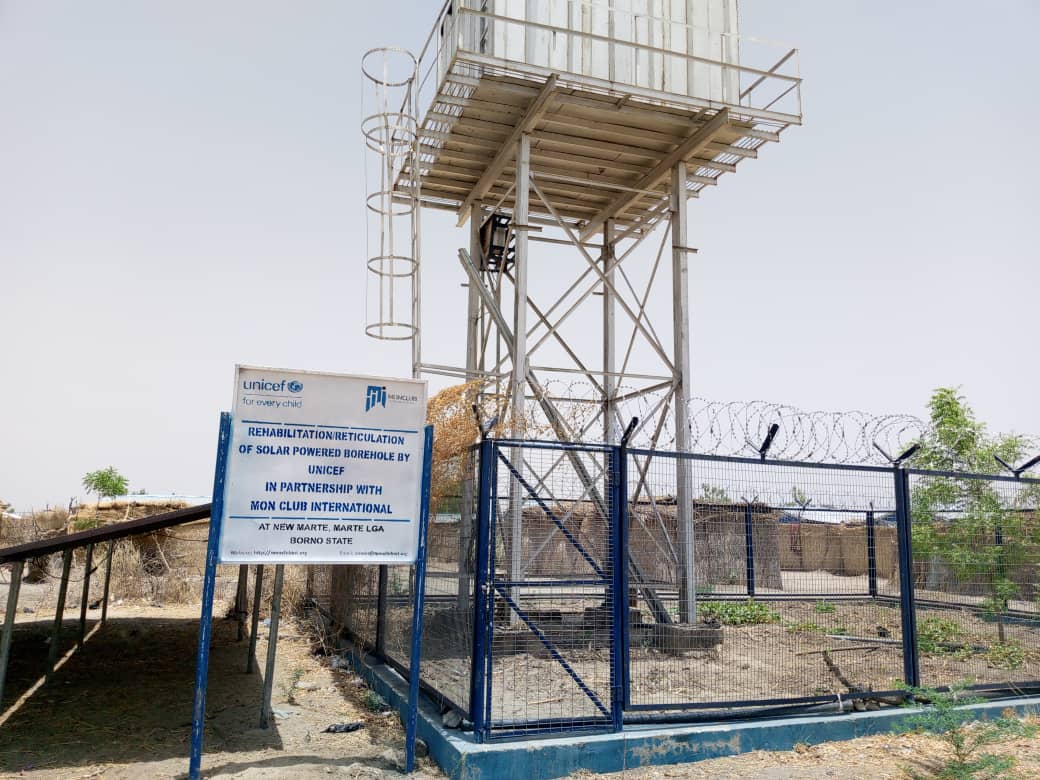
“UNICEF through the RRM programme also worked with Monclu International to drill 5 new hand pumps boreholes, providing access to a minimum of 15 litres water per person per day for at least 2,500 persons daily.. UNICEF, further, trained over 100 volunteers and nutrition mobilizers who go from house-to-house to screen and identify children who are acutely malnourished.
According to UNICEF, so far in the year 2024, 8,605 children between the ages of 6-59 months have been screened for malnutrition. During these screening exercise, a total of 2,156 malnourished children were identified, admitted into the nutrition programme and they fully recovered..
“Over 500 households (3,500 individuals) were provided with WASH non-food items to preserve their health and enhance their personal hygiene. These include jerry-cans, buckets, rubber kettles, bathing and washing soaps, water purifying tablets (aqua tabs) etc.
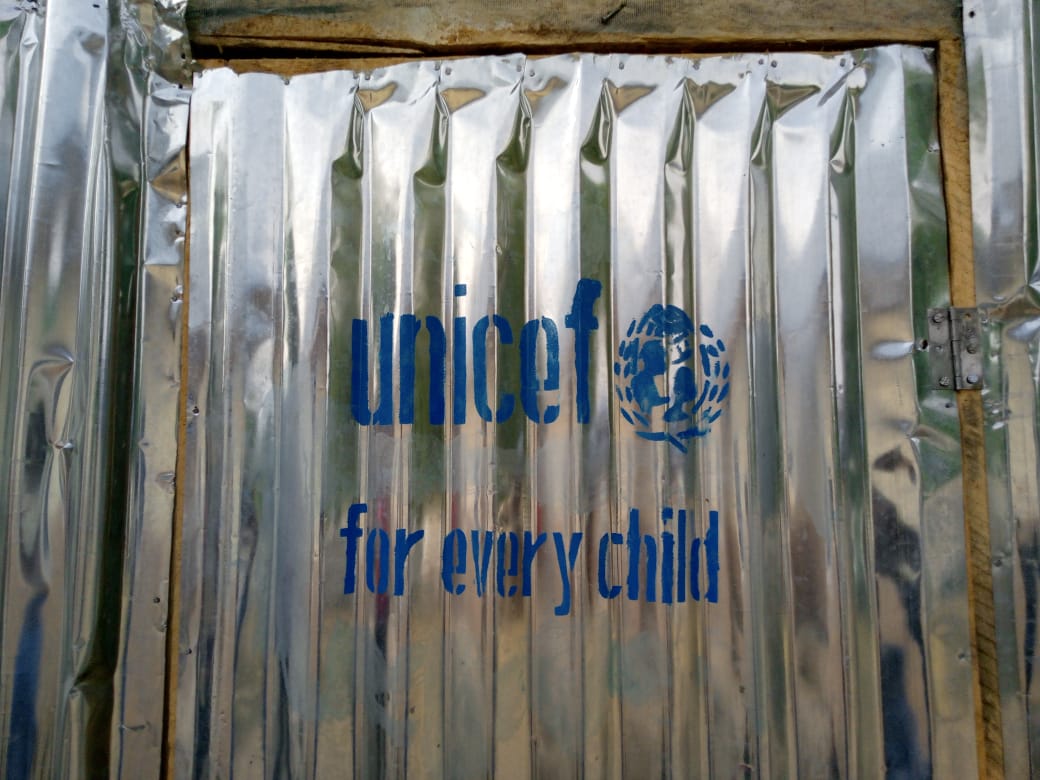
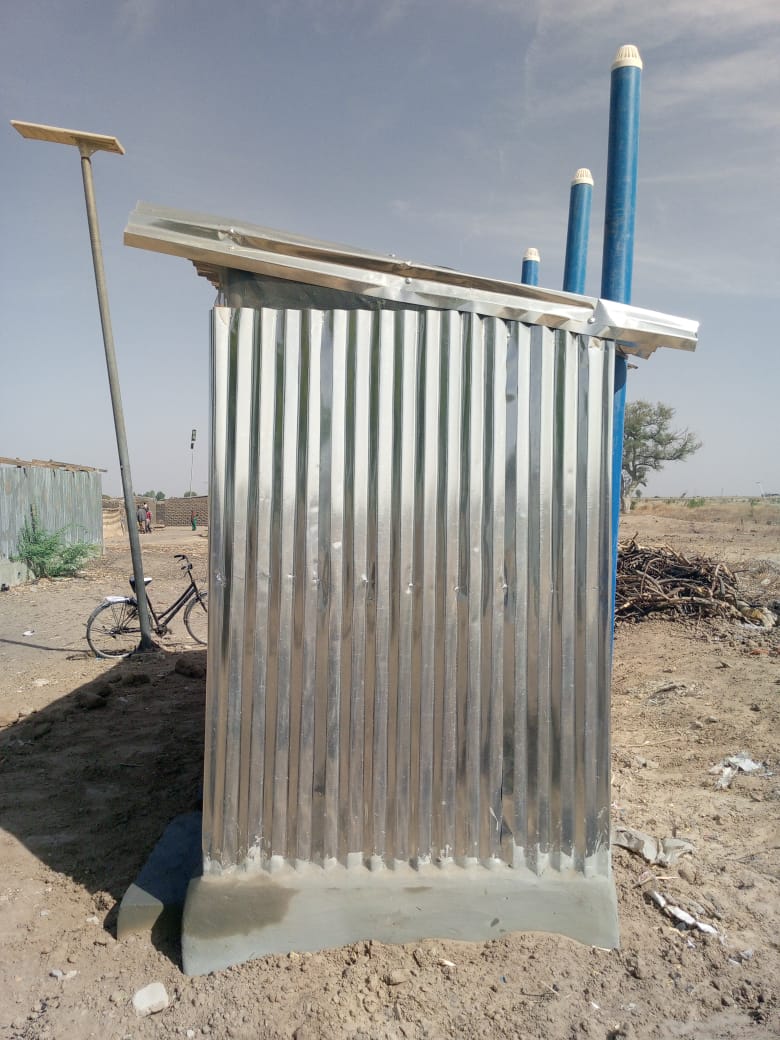
“Others Include construction of 80 drop hole emergency communal latrines serving 4,000 individuals. UNICEF also rehabilitated 1,000 household latrines serving 7,000 individuals. Over 2,090 pregnant and breastfeeding women and girls received micro-nutrient tablets and 6-23 months children received Vitamin A supplement, deworming and prophylaxis.
“Health workers were also trained on community management of acute malnutrition while the health workers (CHEWs) now carry out the management of the OTP site and mobile clinics with or without the support of field staff.
“Training and empowering of 100 volunteers and nutrition mobilizers engaged in Mass MUAC screening exercise in the community. Bucket chlorination to ensure community members use safe water at all times. While over 2,000 mothers have received various messaging on key topics cutting across health, nutrition, sanitation and education”, the statement concluded.