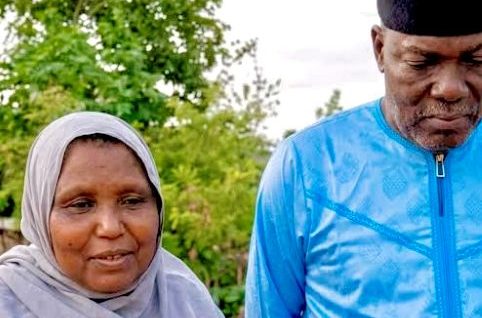
Abubakar-Rabe-and-wife-before his reported death
By JACOB KUBEKA, Abuja –
Executive Director of Development Specs Academy, Prof Okey Ikechukwu, has insisted that the recent media reports about a conference organized by retired military officers described as associates of late Major General Rabe Abubakar (rtd.), has raised some issues requiring further interrogation.
Following the retired general’s death in the hands of bandits, the group had last week called for “comprehensive reforms” of Nigeria’s security architecture and “stronger security institutions, improved collaboration among security agencies, and increased investment in intelligence gathering and border control.”
Reacting to the report, Prof Ikerchukwu wondered: “Are these not senior military professionals, though retired, who should channel their comments to the appropriate quarters?”
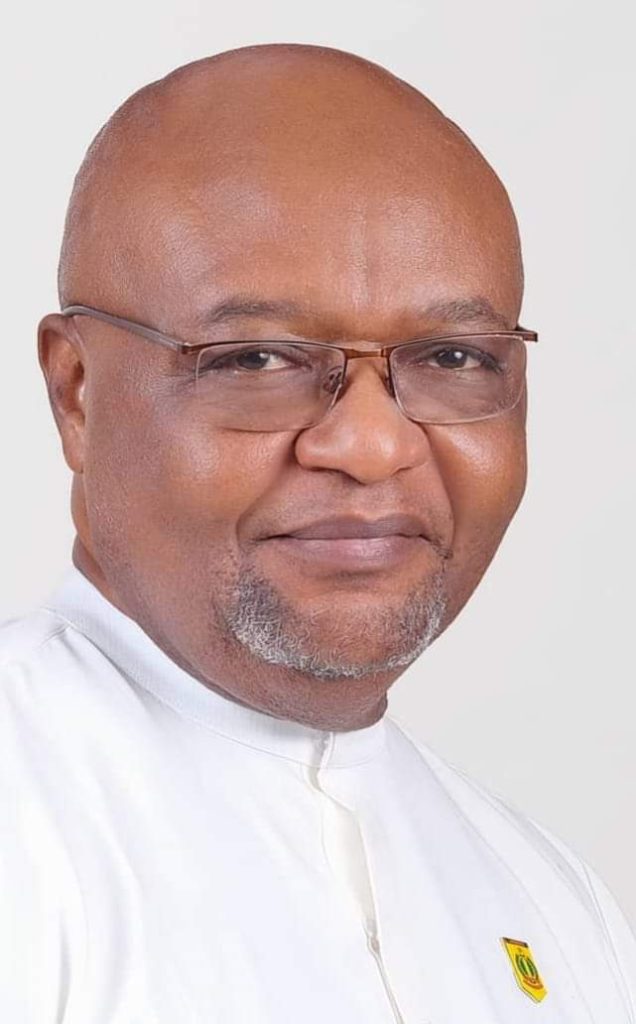
According to him, the call was too general, as it was laced with the type of condemnatory rhetoric that would reside more in the domain of political mischief.
While describing General Rabe Abubakar’s tragic death in the hands of criminals as a painful loss to his loved ones and to a nation he served with distinction throughout his military career, Ikechukwu warned: “our memory of him should not be tainted by questionable media interventions, no matter how well intentioned.”
The public affairs commentator, who also sought to know what exactly the organizers of last week’s conference hoped to achieve, given that from the moment General Rabe Abubakar was kidnapped until his unfortunate demise, these friends were nowhere to be seen.
“He needed them while he was alive, when anything they did in the form of material intervention would have made a difference,” he pointed out.
“His now-very-visible friends were not seen in public in any form of mobilization, or evident engagement with the authorities; including any structured interventions on his behalf. But they were quick to come out and talk about stronger security institutions without telling anyone exactly what they meant by that,” Ikechukwu lamented.
He emphasized that senior military personnel, serving or retired, should ideally not be making certain species of public statements, adding that to speak so loudly about “security architecture” exactly the same way we often hear from many ignorant politicians, raises many questions that are bet not asked here.
According to him, the “soft target” of gathering before the media after a tragedy and making general statements about national security was not enough, especially for the calibre of officers in question.
“They would have made more meaningful impact if they came forward when there was still an opportunity to influence events,” he stressed.
He was of the view that if these retired officers undertook significant efforts behind the scenes it might have made a difference, who knows (but) “what they were doing from the moment the news broke is not in the public domain. Their sudden, organized, emergence after the General’s death inevitably raised questions and invites scrutiny.”
On the issue of the timing of the conference, Ikechukwu noted that the gathering was held after Rabe’s demise and after his wife had also already been rescued through the efforts of security forces. “So, what practical purpose is served by the conference? Was it to help them organize a funeral, or organize support for his wife and family? The conference offered little indication of any concrete supportive initiatives, or ideas.”
He noted that for retired senior officers, Nigerians would also have expected solemn comments on what led to the rescue of Hajia Amina Rabe Abubakar, what delayed it, etc, adding, “they were in a position to, after professional consultations with serving colleagues, help in ensuring that such tragic events do not overshadow public education on the courage, professionalism and sacrifice of those involved in difficult operations.”
He continued: “The calibre of the individuals involved are not the ordinary citizens who are unfamiliar with matters of statecraft, public policy, security management or strategic communication. They are men who have occupied important public offices, served at strategic levels of national responsibility, worn senior military ranks, represented government institutions and participated in decision-making processes that shaped public affairs.
“Several of them also hail from the same state as the late general and were therefore expected to appreciate the personal and emotional dimensions of the tragedy. If anyone should understand the importance of timing, judgment and strategic communication in moments of crisis, it ought to be members of this group.
“Their collective experience should have informed a more constructive response—one centred on supporting the family, honouring the deceased, commending those who secured the rescue of his wife and advancing practical recommendations for preventing similar tragedies.
“Their experience and professional standing should have guided them towards actions and utterances capable of making a tangible positive difference, either during the late general’s captivity or in supporting his family after the tragedy. Instead, what emerged was a public intervention that many may regard as ill-timed, poorly conceived and disconnected from the immediate concerns arising from General Abubakar’s death.
The tragedy here is, therefore, not just the fact that a distinguished officer lost his life, but that those who now claim friendship appeared absent during the period when that friendship was needed most. The conference of the retired officers came too late, achieved nothing, tried to politicize security and raised more questions than it answered.”