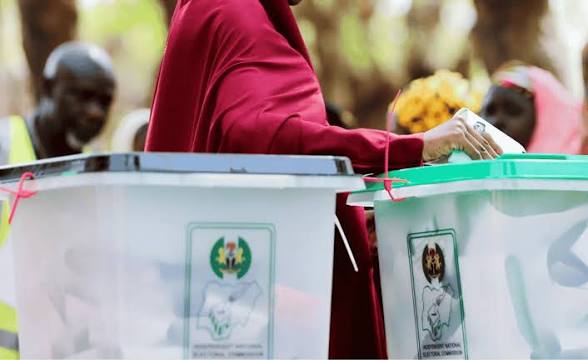
Conversations around Nigeria’s electoral reform focus mainly on electoral laws, institutions, technology, and the credibility of elections. While these are central and fundamental, a deeper dimension that must be at the centre of the conversation has emerged in my research.
My study, “Democracy Communication and Citizens’ Perceptions of Political Trust and Democratic Legitimacy in Nigeria,” examined how democracy communication shapes citizens’ perceptions of political trust and democratic legitimacy.
Relying on qualitative data collected through Focus Group Discussions and Key Informant Interviews across 12 Local Government Areas in Abuja and Lagos, the study showed that democracy communication plays a central role in how citizens understand and engage with democracy. Citizens engage with the core principles of democracy, including free, fair and credible elections, rule of law, separation of powers, participatory decision-making, accountability, and fair and equitable representation, through communication.
The study further revealed that Citizens who show a stronger preference for participatory democracy communication are those who have experienced dialogue-based engagement.
This is because participation, inclusion, collective decision-making and accountability are not external to communities. They are rooted in people’s socio-cultural systems of indigenous knowledge used for social interaction and collective decision-making.
Citizens showed an understanding of what strengthens and erodes trust in democratic institutions in all 12 Local Government Areas studied. Their dealing with democracy were conditional. They are more willing to engage and support democracy and democratic institutions when accountability, participation and responsiveness are present, whereas they disengage when distrust rises and dominates.
These findings reveal central and fundamental issues. Citizens actively evaluate, negotiate and respond to how democracy is communicated and practiced; they are not mere passive recipients of democracy. Despite this, a significant mismatch between institutional communication and citizens’ preferences exists. The reliance of government and political institutions on top-down communication is a dominant practice.
A Preference for communication that allows citizens to ask questions, deliberate, negotiate, contribute, and influence decisions is strongly expressed. Democratic communication is seen as more credible and legitimate, especially when facilitated through trusted local community structures.
This has profound implications for electoral reform. Nigeria cannot achieve electoral reform while communicating with citizens as though they are merely an audience. Electoral reform is not only about changing laws or introducing technology. The citizens must understand the reforms, participate in the conversation, question them, have opportunities to influence implementation, and must be able to hold institutions accountable.
This is why this study argues that electoral reform is largely a communication process. Electoral credibility and service delivery are not the only factors that determine citizens’ support for democracy. Communication processes that create opportunities for dialogue, negotiation, and meaningful participation in governance shape citizens’ support for democracy.
The understanding of democracy should not be based on its assessment as a system of institutions and procedures; it is also an ongoing communicative relationship between the state and its citizens.
Nigeria must reposition democracy communication from a peripheral activity to a central pillar of its democratic practice and electoral reform. Political actors, electoral institutions and policymakers must champion the institutionalization of participatory democracy. This communication process enables citizens to engage, deliberate, negotiate and co-create solutions to governance challenges.
If we Nigerians want electoral reforms that citizens trust, understand and own, we must embrace communication. A means by which we stop communicating to citizens and start communicating with them. We cannot achieve electoral reform without effective “Democracy Communication”.
__Audu Liberty Oseni, PhD Director, Centre for Development Communication (CDC) Email: libertydgreat@gmail.com
_