By CHRISTIANA LOT, Jos –
As part of efforts to draw attention to the protracted humanitarian crisis and insecurity in Plateau State, legal luminaries, filmmakers, academics, and peace advocates have called for an end to impunity and a renewed push for justice for communities devastated by violent conflict across the state.
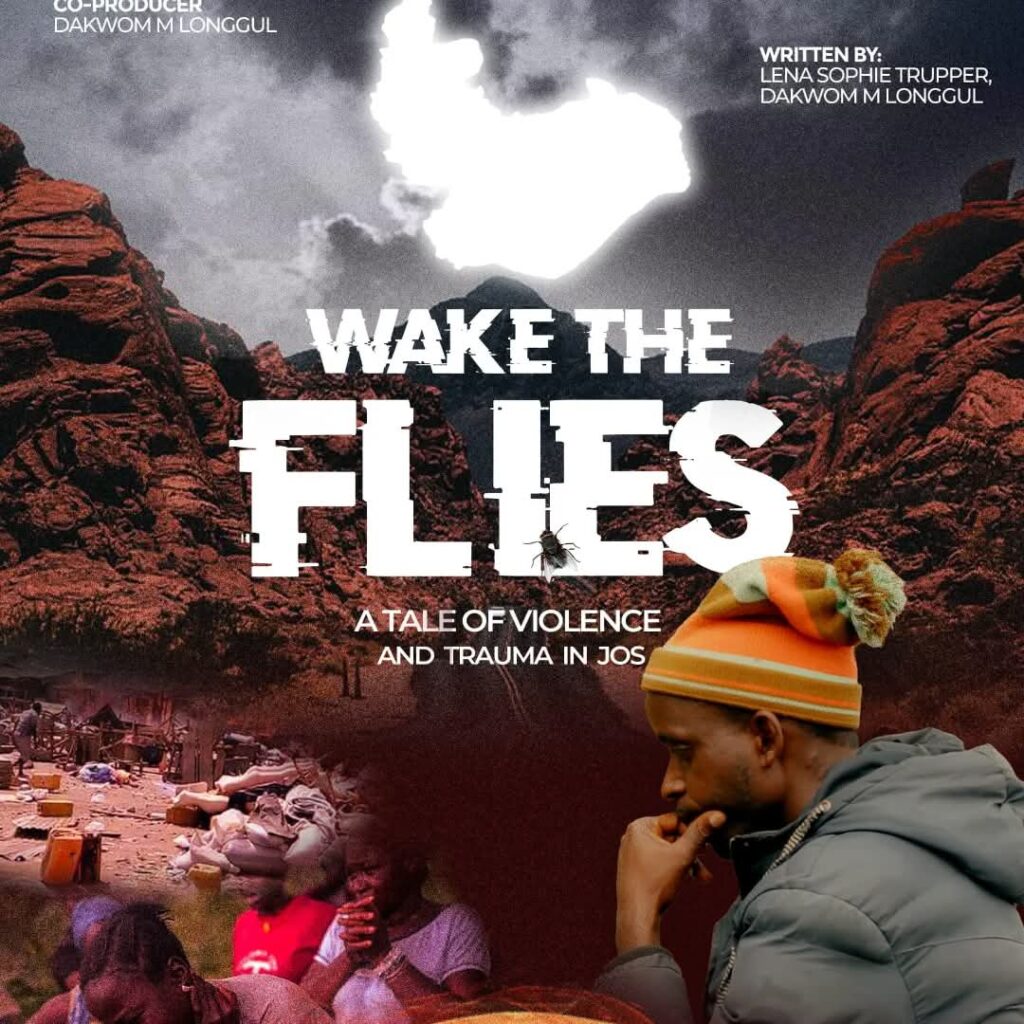
The call was made during the Nigerian premiere of the documentary ” Wake the Flies”, held in Jos, and supported by Transcontinental Media Production in collaboration with the Centre for Conflict Management and Peace Studies, University of Jos.
In his keynote address, Professor Dakas C.J. Dakas (SAN) described the film as a powerful metaphor and a collective mirror reflecting the tragic cost of silence, injustice, and neglect over the past two decades in Plateau.
“This film is more than a title. It is a metaphor: for the stench of silence, the pervasiveness of death, the weight of unanswered questions, and the haunting of abandoned communities. It compels us to awaken our collective conscience,” he said.
He decried the failure of state institutions to respond adequately to recurring killings and displacements, warning that what was once labelled communal clashes has now morphed into a systematic campaign of terror.
“The crisis on the Plateau is not new. Over the years, we’ve seen a disturbing pattern of targeted attacks—thousands killed, entire communities uprooted. What was once a place of coexistence is now a theatre of greed and fear.
“These are not mere statistics. These are real people—fellow citizens—whose lives have been shattered.” He noted.
Dakas, a former Attorney General of Plateau State, expressed deep concern that perpetrators are rarely brought to justice, fueling cycles of impunity and eroding trust in governance and the justice system.
“Killers roam free. Victims are forgotten. Communities cry out, but their pleas meet silence. And that silence is complicity.”
He stressed that justice must go beyond prosecutions to include rebuilding communities, institutional reform, and trauma healing in line with international frameworks like the Kampala Convention.
He recommended independent investigations, prosecution of all offenders regardless of status, stronger institutions, and sustained support for victims.
Director of the film, Dakwom Makpring Longgul, said ‘ Wake the Flies’ was inspired by his personal experience of violence during his undergraduate years in Jos.
“I saw someone killed. I saw flies covering the body. That image never left me. For me, flies became symbols of death on the Plateau,” he said.
Longgul said the film seeks to preserve memory and ignite conversation around the deeper roots of conflict, identity, and trauma.He also criticized the illusion of visibility on social media.
“We are not just telling a story—we are holding up a mirror. If it helps even one person understand the background to Plateau’s conflict, then it has served its purpose.”
“We think the world sees us, but we remain invisible. This film is our way of breaking through that silence.” He stated.
Joining virtually from Los Angeles, producer Lena Truper described ‘ Wake the Flies’ as a transcontinental collaboration between Africa, Europe, and North America.She also emphasized the power of documentary filmmaking in fostering healing, accountability, and historical truth-telling.
“This is not just a Jos story. It reflects global fault lines—colonial legacies, identity divisions, and the long psychological aftershocks of violence.” She said.
A post-screening panel featuring Prof. Chris Kwaja, Prof. Jimam Lar, Comrade Joelengs Lengman, and Hon. Samaila Abdullahi Muhammad discussed transitional justice, land rights, and the failure of political institutions.
The event concluded with a call for inclusive policymaking, trauma-healing programs, and prosecution not only of perpetrators but also of their sponsors and enablers.
Wake the Flies, supported by the Hessen Film and Media Foundation, continues to amplify the voices of affected communities and highlight the urgent need for justice in Plateau and beyond.