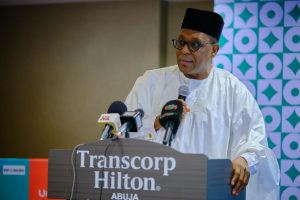
Former Kaduna State Governor, Nasiru El-Rufai
Today marks 127 days since former Kaduna State Governor, Mallam Nasir El-Rufai, became entangled in a web of legal battles that have significantly restricted his freedom and altered the trajectory of his public life.
What began as a series of investigations and court proceedings has evolved into a prolonged period of detention and stringent bail conditions, leaving political observers, supporters, and critics alike questioning how much longer the uncertainty will persist.
Despite appearances in court and applications for bail, the former governor has remained under varying forms of restriction arising from multiple cases.
The conditions attached to his bail arrangements have been described by associates as stringent, making it difficult for him to regain the level of mobility and public engagement that once defined his political career.
As the days stretch into months, concerns have continued to mount over the length of the process and its broader implications. While the courts remain the proper avenue for determining guilt or innocence, the prolonged nature of the proceedings has fueled debate about the balance between the demands of justice and the rights of individuals undergoing trial.
For many of El-Rufai’s supporters, the 127-day milestone represents more than a numerical count. It symbolizes a period of political uncertainty, personal hardship, and legal contestation. They argue that the former governor deserves a speedy resolution of the matters before the courts, insisting that justice is best served when legal processes are concluded without undue delay.
On the other hand, those who support the investigations maintain that accountability must take its full course, regardless of the status or influence of those involved. They contend that public office holders should be subject to the same legal scrutiny as every other citizen and that the judicial process should not be rushed.
Yet, beyond the legal arguments, one reality remains undeniable: uncertainty continues to dominate the narrative.
Neither the courts nor the relevant authorities have provided any indication as to when all pending issues surrounding the former governor will be conclusively resolved. Consequently, speculation has flourished, with every court appearance, adjournment, and procedural development generating fresh questions.
Political analysts note that the situation has become one of the most closely watched legal and political episodes in recent Kaduna history. The outcome is likely to have implications not only for El-Rufai personally but also for the wider political landscape, given his enduring influence in national and state politics.
As the count reaches 127 days, the central question remains unanswered: Is there an end in sight?
For now, the former governor remains caught between legal proceedings and an uncertain future, while supporters, critics, and observers continue to watch the unfolding developments.
Whether the count stops tomorrow or continues beyond today, only time and the courts will provide the answer.